Microsoft MS-DOS
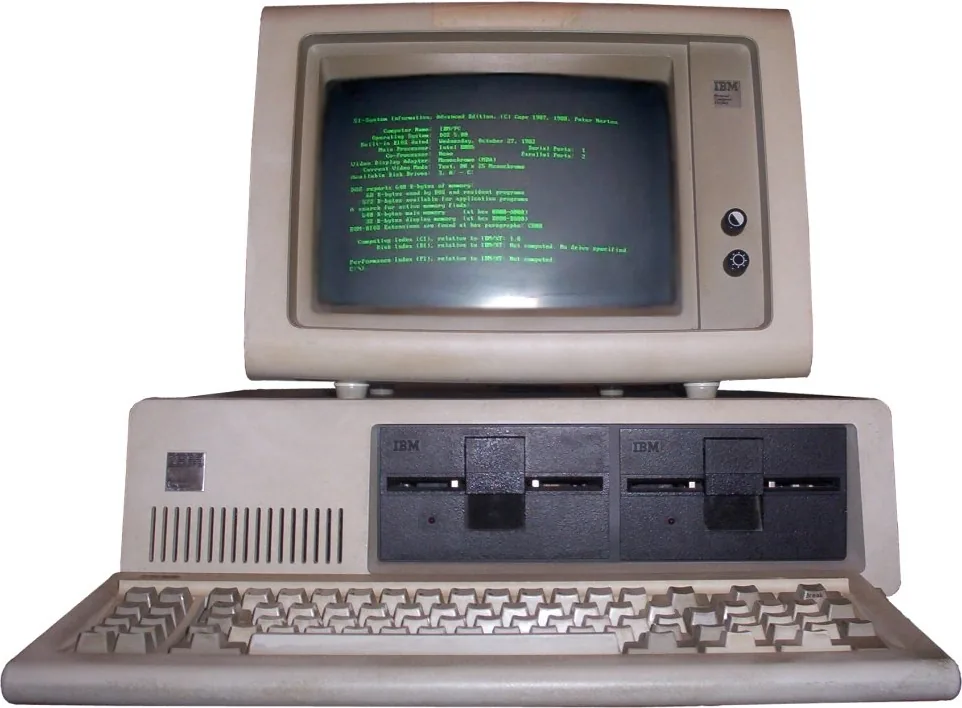
Microsoft Corporation released MS-DOS in 1981 as a disk operating system for 8086 16-bit processors, establishing it as the foundational software environment for early IBM Personal Computers and a host of compatible systems
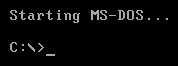
MS-DOS formed the core software layer for a generation of business and personal computing, built around a tripartite structure: the hardware-dependent BIOS, the logical I/O manager MSDOS.SYS, and a command processor15. Though nominally a Microsoft product, its deployment was deeply intertwined with hardware vendors, most notably International Business Machines Corp., which adopted MS-DOS, then referred to internally as "Bild Personal Computer DOS", as the operating system for its Personal Computer7. The BIOS, tailored to specific machines such as the Attache 8-16, resided in IO.SYS, while MS-DOS itself handled abstracted file and device operations before delegating to BIOS for physical execution15.
By version 2.0, MS-DOS demanded at least 128K of memory and two 360K floppy disk drives, with a hard disk advised for serious applications like Sales and Purchase Order Processing91112. The system relied on the MS-DOS FAT filesystem and included a suite of driver utilities, among them HIMEM.SYS for extended memory management, EMM386.EXE for 386-enhanced memory simulation, SMARTDRV.EXE for disk caching, and multiple mouse drivers including MOUSE.COM, LMOUSE.COM, and vendor-specific variants like MOUSEHP.SYS for Hewlett-Packard systems2. These components allowed MS-DOS to scale across evolving PC hardware, though the operating system remained fundamentally constrained by its 16-bit architecture and reliance on real-mode execution.
Microsoft maintained an active development group for MS-DOS well into the 1990s, releasing versions 5.0, 6.0, and ultimately 6.22, which appeared in retail upgrade packages labeled "step-up", "upg", and "upg 3pk"81. The commercial success of these upgrades indicated continued demand for standalone DOS functionality even as graphical environments advanced8. MS-DOS 4.0, priced at $49.00, was distributed in two physical formats: OS-105-MS on 5.25" media and OS-103-MS on 3.50"10. Despite speculation in 1993 that Windows 95’s protected mode components might form the basis of an MS-DOS 7.0 release, Microsoft had not confirmed such a product by mid-19948.
Third-party software support solidified MS-DOS as a business platform: IBM announced Microsoft BASIC and Microsoft Pascal alongside accounting and word processing applications for the environment7. The Attache 8-16 system, for example, explicitly required MS-DOS 2.x to operate15. Compatibility remained a selling point: SunPC, a hardware emulation solution in 1997, allocated 12 MB of disk space specifically to support MS-DOS and Windows applications16. Microsoft consistently asserted trademark control over the name, with MS-DOS registered or acknowledged as a trademark in multiple corporate and technical documents through the 1990s346101314.
MS-DOS was never a finished artifact but a continuously adapted substrate, surviving its own obsolescence by becoming indispensable. Its limitations, primitive memory management, lack of preemptive multitasking, and dependence on command-line interaction, were accepted trade-offs for ubiquity and control. The operating system did not so much evolve as accrete, with each version layering new utilities atop an unchanging foundation. That it remained viable enough to warrant a 6.22 release in the era of Windows 95 speaks less to innovation than to the inertia of enterprise software ecosystems.
References
- PCMagazine V13N17 19941011 (1994)
- 030-31645 Microsoft Windows 3.1 Resource Kit 1992 (1992)
- remark-volume12-issue6-1991 (1991)
- Intel 386 Model 302 Board Technical Reference Jan90
- 210621-032 Intel Literature Guide Q1-89
- 174385-001 Overview of the XENIX 286 Operating System Nov84
- TheMS-DOSEncyclopedia RayDuncan
- Inside Windows 95 Adrian King 1994 (1994)
- profiles v3n7
- remark-volume11-issue10-1990 (1990)
- profiles v3n5
- profiles v3n6
- 174389-001 XENIX 286 System Administrators Guide Nov84
- The Rainbow Vol. 10 No. 11 - June 1991 (1991)
- 92051242 Attache8-16 Tech Supplement Dec83
- SunPCJustTheFacts Oct97