IBM OS/2
IBM's multitasking operating system, jointly developed with Microsoft through version 1.2, then continued solely by IBM beginning with version 1.3, targeted at professional PC users requiring advanced memory management and DOS compatibility.
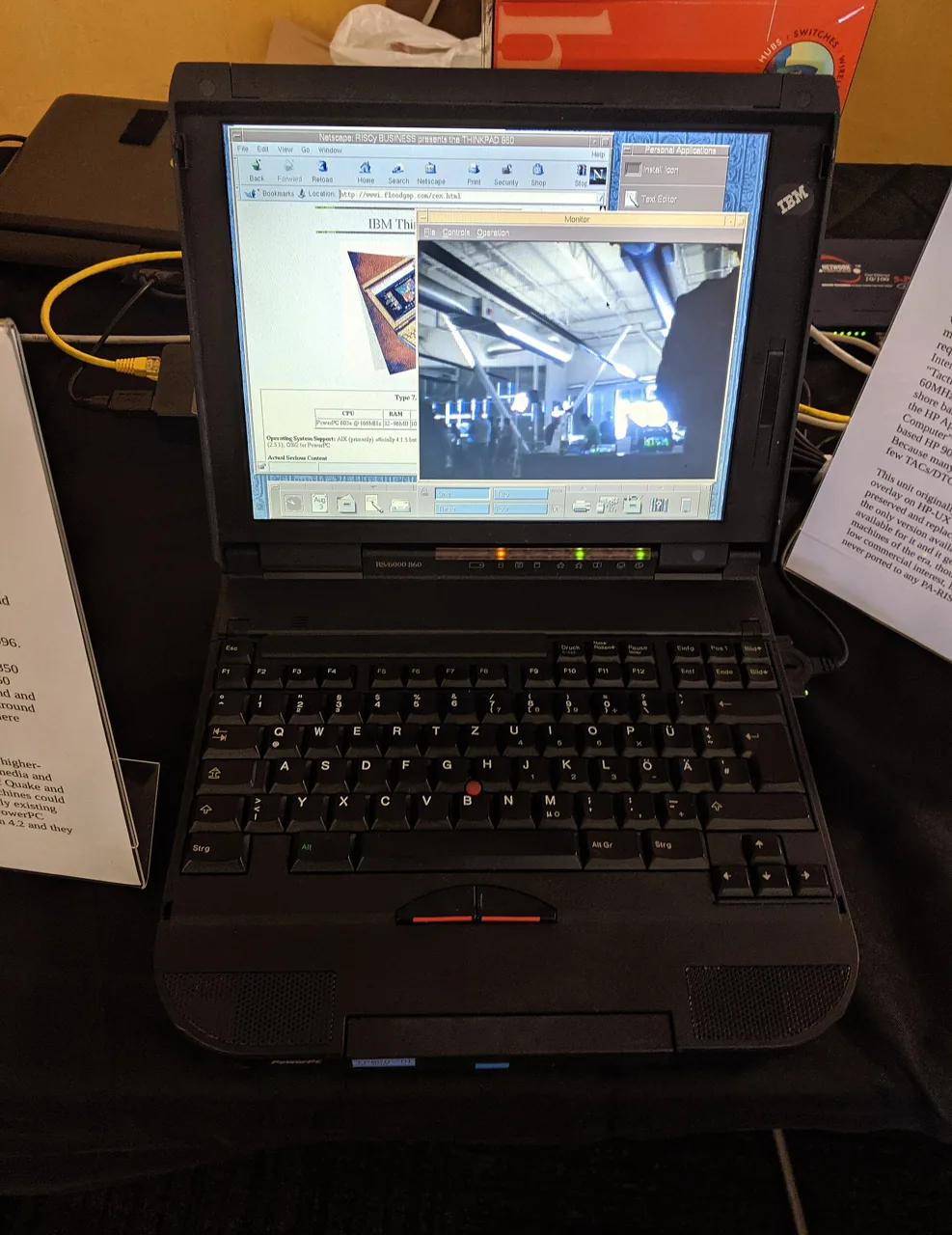
OS/2 emerged from a collaboration between IBM and Microsoft, with the first three versions (1.0, 1.1, and 1.2) developed jointly2. By mid-1990, Microsoft had demonstrated early builds of what would have been OS/2 2.0, but IBM assumed full control of the project and formed its own team to complete it2. The commercial release of OS/2 Version 2.0, delayed until early 1991, marked the culmination of IBM’s independent development effort213. No OS/2 releases occurred in 199013.
It featured a streamlined kernel that ran considerably faster than earlier versions, improved networking and graphics support, and, critically, finally enabled reliable printing2. IBM produced extensive documentation for the platform, including the OS/2 Technical Reference, priced at $2008, and the Graphics Development Toolkit, which sold for $1,100 in its initial release and dropped to $530 by version 1.28.
OS/2 Version 2.0 represented a technical leap: it required an Intel 80386 or compatible processor and made full use of the 32-bit instruction set, abandoning the 80286 emulation mode used in prior versions612. It introduced a flat 32-bit memory model, breaking the 640KB barrier and allowing systems with more than 16MB of RAM to use all available memory, provided the hardware supported it61012. The operating system supported multitasking, multiple threads, dynamic linking, and interprocess communication, with a graphical user interface6.
The file system in OS/2 2.0 was the High Performance File System (HPFS), which supported long filenames and Extended Attributes6. Cache management was improved over earlier versions, and the system could prefetch records during sequential file access to enhance performance6. SCSI support was strong, particularly with IBM Busmaster adapters, where commands could be chained to initiate multiple disk operations in a single call; limited support also existed for non-IBM SCSI adapters6.
Two primary editions were offered: Standard Edition (SE) and Extended Edition (EE)10. The Extended Edition included Communications Manager and Database Manager, in addition to the core OS/2 functions and Presentation Manager found in the Standard Edition10. OS/2 EE also bundled IBM OS/2 LAN Server, which provided networking capabilities for IBM Token-Ring, PC Network II, and Baseband systems, enabling resource sharing and featuring advanced security and print job management3.
Despite its technical strengths, OS/2 faced severe market challenges. IBM did not actively market the operating system, resellers were uninformed, and availability was poor; many dealers did not know how to order or demonstrate it2. The OS/2 2.0 System Developer's Kit, priced at $2,600, deterred many developers, and early versions shipped with serious bugs that rendered them unusable for most2. In contrast, Windows 3.0 sold more copies in its first month than OS/2 had sold in three years, shifting developer focus decisively away from OS/213. Hewlett-Packard’s release of LaserJet drivers for OS/2 in 1990 came too late to rescue version 1.x13.
Minimum hardware requirements for the base system included an IBM PC AT, XT Model 286, or PS/2 Models 50, 60, or 80, at least one diskette drive, a hard disk, keyboard, display, and adapter10. Memory requirements varied: 1.5MB for SE with OS/2 only, 2.0MB with DOS support, and 3.0MB for EE10. For OS/2 2.0, a minimum of 4MB RAM and a 60MB hard disk were recommended6.
OS/2 provided strong compatibility layers: both 16-bit and 32-bit versions supported DOS applications, while the 32-bit version added compatibility with Windows 3.0 and 16-bit OS/2 programs5. IBM established a compatibility test facility to verify OS/2 2.0 functionality on non-IBM hardware, with a continually updated list of certified systems6.
Period commentary noted the operating system’s high cost, with one 1987 observer remarking it “seems like an awfully expensive operating system for a microcomputer to me,” and estimating a base price of at least $300 and an extended version near $90016. The OS/2 User's Guide, Command Reference, and technical compendiums such as OS/2 Version 2.0 - Volume 1: Control Program and the full Technical Compendium (GBOF-2254) formed a comprehensive documentation suite671214.
Among individuals named in the documentation, Paul, an IBM engineer since 1979, worked on the keyboard device driver for OS/2 1.0 and continued on OS/2 projects from 1986 onward4. Technical support contributions came from Hans J. Goetz, Giffin Lorimer, Alan Chambers, Franco Federico, Douglas Pearless, and Neil Stokes, all affiliated with IBM’s International Technical Support Centers12.
References
- G320-9781-00 PS2 and Printers Sales Advisor 198905 (1989)
- Mastriani Writing OS2 2.1 Drivers In C 1993 (1993)
- PC Seminar V06 N05 198804 (1988)
- Magid - OS2 Warp Uncensored 1995 (1995)
- Deitel - The Design of OS2 1992 (1992)
- GG24-3730-00 OS2 V2.0 Vol 1 Control Program 199204 (1992)
- SC31-6075-2 TCP-IP Ver 1.2 for OS2 Installation and Maintenance 199110 (1991)
- IBM Technical Directory IBM PC and PS2 Jun88
- IBM Technical Directory Tenth Edition Jun92
- G360-2650-00 OS2 Information and Planning Guide 198707 (1987)
- IBM Personal System 2 and IBM Personal Computer Product Reference Ver 4.0 Sep88
- GG24-3774-00 OS2 V2.0 Vol 4 Writing Applications 199301 (1993)
- Minasi - Inside OS2 2.0 1992 (1992)
- GG24-3775-00 OS2 V2.0 Vol 5 Print Subsystem 199208 (1992)
- S82G-1501-01 ThinkPad HMM vol 1 199505 (1995)
- remark-volume8-issue12-1987 (1987)