RT-11
Digital Equipment Corporation’s RT-11 was a real-time operating system for the PDP-11 series, notable for its modular monitor architecture and widespread adoption in industrial and embedded roles, with over 80,000 licenses sold by 19841.
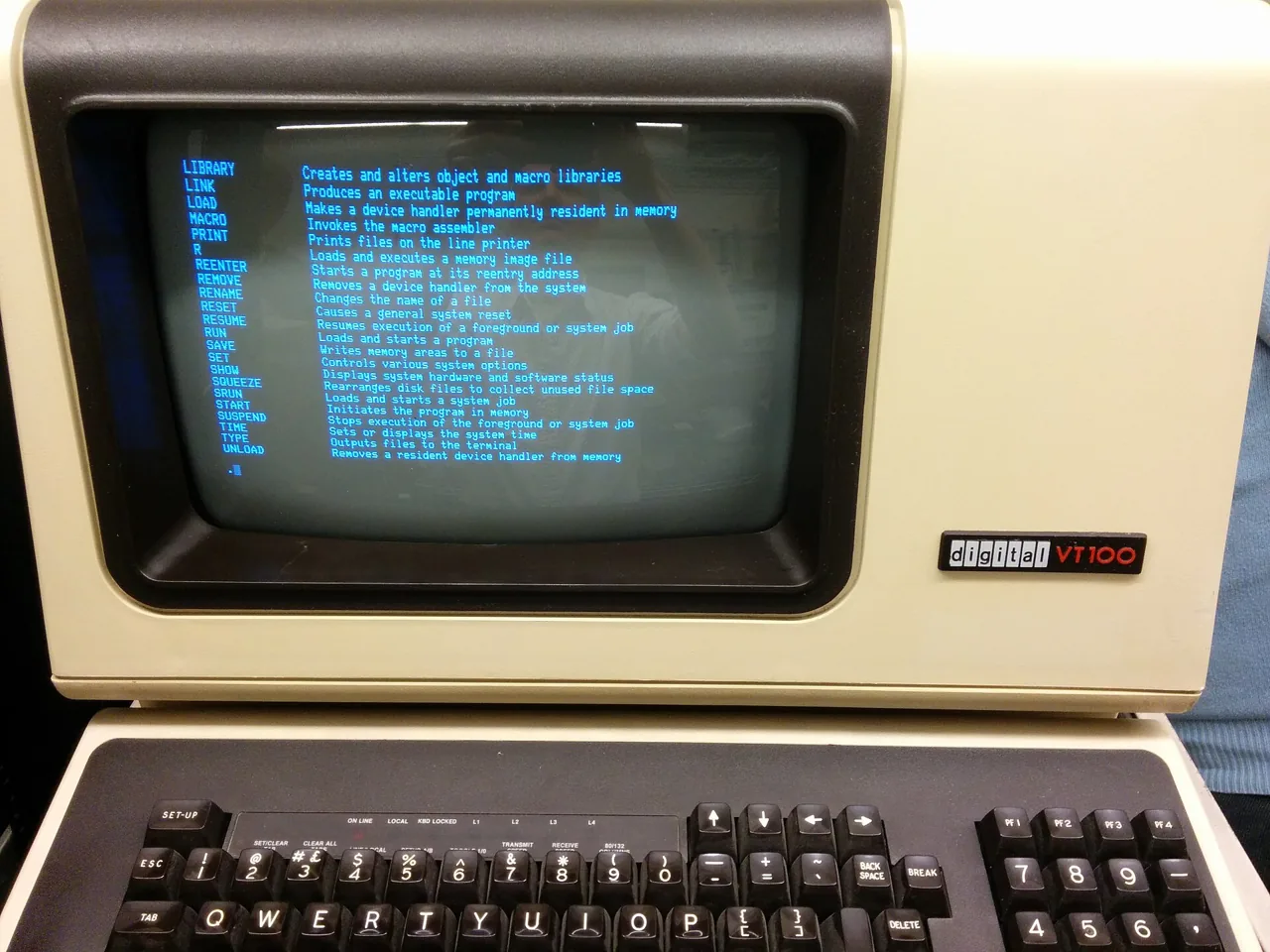
The system shipped in three distinct monitor configurations: SINGLE-JOB (SJ), FOREGROUND/BACKGROUND (FB), and EXTENDED MEMORY (XM), each defining how the OS managed memory and multitasking11. The SJ monitor, intended for single-user, single-program operation, functioned in systems with 16K to 28K words of memory2. The FB monitor allowed background processing during foreground I/O waits, improving CPU utilization in real-time environments11. The XM monitor broke the 64KB addressing barrier of the PDP-11’s 16-bit architecture by enabling up to 248 Kbytes of physical memory, supporting both foreground and background jobs beyond the standard limit11. XM systems required between 24K and 124K (126,976) words of memory to operate2.
Memory management included quirks born of hardware constraints. The MSV11-DD memory board for the LSI-11 microcomputer allowed access to up to 30K words under SJ or FB monitors, though the additional 2K words beyond the standard 28K limit required a physical jumper to activate7. The system’s installation process relied on low-level memory operations: during boot, RT-11 ran an installation check and retrieved device size from memory location 50, which had been populated by the VM: handler’s memory-sizing routine3.
RT-11 supported a defined set of storage devices through specific controllers and peripherals. Disk cartridges used the RK11/RK611 controller with RK05, RK05F, or RK06 drives2. Fixed-head storage was handled by the RF11/RH11 controller with RS11 devices, or standalone RJS03 and RJS04 units2. Removable disk packs used the RP11 controller with RP02 or RP03 drives2. For floppy media, the RX11 controller and RX01 diskette drive were supported2. Cache memory on the 11/34 model, specifically the KK11-A unit, was supported and monitored for errors, with RT-11 capable of detecting and reporting cache faults7.
The operating system used DIGITAL COMMAND LANGUAGE (DCL) for user interaction and included the PERIPHERAL INTERCHANGE PROGRAM (PIP) for file transfers across devices11. It offered a suite of development tools, including compilers for FORTRAN-77, APL, and C, alongside utilities aimed at streamlining interactive program development1. Version 5.1 introduced VTCOM, a communications option enabling RT-11 systems to function as intelligent terminals connected to host systems, whether Digital or non-Digital1.
A notable enhancement in RT-11 V4.0 Autopatch Revision D was the inclusion of IND.SAV, a feature that brought RSX-like command file capabilities to the system, supporting parameter substitution, user prompts ("ASK"), limited arithmetic, and flow control via ".GOTO" and ".GOSUB"9. This patch required the Single Job monitor to be SYSGENed with timer support to function9. Compatibility with TSX-PLUS V3.1 was confirmed for RT-11 V4.01.
RT/EMT, a software package announced by Human Computing Resources Corporation, enabled RT-11 software development under UNIX by providing an emulator and command interpreter5. The emulator ran unmodified RT-11 binaries (including MACRO, LINK, LIBR, FORTRAN, PIP, and TECO with VS2 screen support) while the interpreter replicated most RT-11 keyboard monitor commands510. RT-11 file systems were simulated using UNIX directories, with each user maintaining a separate virtual file system5. The system operated in user mode without requiring modifications to UNIX itself, and system overhead was reportedly comparable to native RT-11510.
By late 1984, RT-11 had achieved significant market penetration, with over 50,000 reported sites and more than 80,000 licenses sold directly by Digital, not counting OEM distributions13. It was described as Digital’s highest-volume operating system and a profitable product line, serving as an industry standard for OEMs and system integrators3. Despite internal discussions about its future following the release of Version 4, the system remained commercially active, with development sustained by corporate policy and third-party software support3. Licensing costs varied by volume: a single license under "CAT D" pricing cost $489, dropping to $200 for 200–399 copies12.
References
- Mini-Tasker March1984 (1984)
- DEC-11-ORGDA-A-D RT-11 System User's Guide Mar78
- Mini-Tasker December1984 (1984)
- Mini-Tasker October1983 (1983)
- AUUGN-V03.2
- DEC-11-ORITA-A-D Introduction to RT-11 Mar78
- AA-5286B-TC RT-11 System Release Notes Mar79
- remark-volume5-issue1-1984 (1984)
- Mini-Tasker May1984 (1984)
- AUUGN-V01.6
- 20201201 PowerFrameTechnicalSummary (2020)
- iRMX Field Sales Training
- Mini-Tasker January1984 (1984)
- AA-H281A-TC RT-11 PDT-11 Installation Notes Mar79
- CombinedNewsletter June1984 (1984)
- AA-5283B-TC RT-11 System Generation Manual Mar78