Windows 98
Microsoft Corporation released Windows 98, a mostly 32-bit operating system that retained 16-bit compatibility and integrated USB support directly into the retail product.
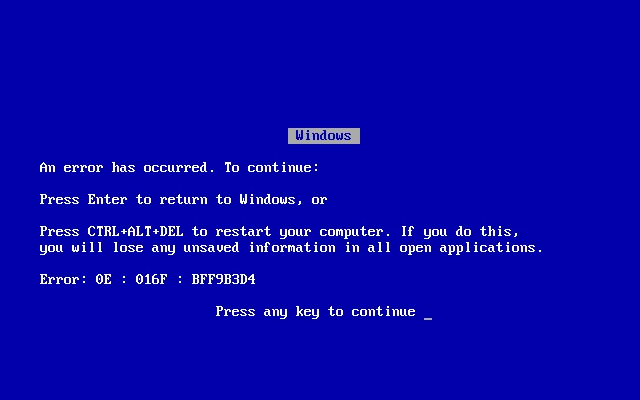
Windows 98 marked the refinement of Microsoft’s consumer operating system line, succeeding Windows 95 and forming part of the Windows 9x series 414. Though built on 32-bit protected mode with a 4 GB flat memory model, it preserved sufficient 16-bit subsystem support to run legacy applications without compromise, a design necessity in an era of transitional software 414. The operating system exposed this duality plainly: beneath its modern shell, the conceptual scaffolding of DOS remained structurally intact, a fact acknowledged in technical literature of the time 3.
One of its defining technical inclusions was native USB support, fully integrated into the retail release. This distinguished it from earlier versions where such functionality required add-ons or patches 4. This integration arrived just as peripheral manufacturers began shifting toward USB-based devices, positioning Windows 98 as a practical bridge between legacy hardware and emerging standards. Additionally, OEM versions of Windows 98 and 98SE shipped on bootable CD-ROMs, a detail that eased deployment for system builders even if retail users rarely encountered it 4.
The operating system adhered to the Win32 API, ensuring compatibility across development environments targeting Windows 95, 98, and NT platforms 14. Despite architectural differences, Windows 98 could be integrated into NT and Netware networks, with tools such as the Zero Administration Tool Kit supporting enterprise management tasks 9. Driver support for contemporary chipsets, such as VIA, was included directly on the installation CD-ROM, reducing reliance on third-party media 3.
Among its most lauded features was the System Information program, which provided detailed diagnostics of both hardware and software configurations. Reviewers noted it rivaled third-party system profiling tools in depth and usability, making it an unexpectedly capable utility for troubleshooting and inventory 23. Printer support spanned a documented range indexed under sections 897–900 in technical manuals, though specific models or protocols were not detailed in surviving documentation 2. The Windows 9x Device Manager and Performance tools were also present, offering granular control over resource allocation and system responsiveness 2.
Its development concluded on May 14, 1998, when Microsoft announced completion of all work 6. However, release to PC manufacturers was delayed until May 15, reportedly due to ongoing discussions with the Department of Justice and State Attorneys General over antitrust concerns. A Microsoft-sponsored poll conducted in late April 1998 indicated public opposition to any potential government block of the launch, suggesting strategic narrative management ahead of the June 25 consumer availability date 6.
Windows 98 SE (Second Edition) emerged later as a recognized revision, though the fact sheet does not specify its release date or technical differentiators 110. The product line eventually extended to Windows Me, which inherited the 9x lineage but was sharply criticized for reduced reliability and security compared to the NT-based Windows 2000 413. Indeed, the split between the consumer-focused 9x branch and the NT enterprise line had already solidified.
Despite its technical accommodations, Windows 98 was never intended for server roles and lacked the security architecture of its NT counterparts, a limitation explicitly acknowledged in contemporary assessments 13. Its legacy rests not in stability or longevity, but in timing: it arrived when home computing began embracing plug-and-play peripherals, broadband aspirations, and multimedia convergence, serving as the last widely adopted OS that still bowed to the DOS era’s constraints.
Specifications
| Product type | Operating system |
| Manufacturer | Microsoft Corporation |
| Operating system class | Mostly 32-bit, with 16-bit application support |
| Memory model | 32-bit protected mode, 4 GB flat address space |
| API | Win32 API |
| File system features | Installable file systems, 250-character long file names |
| USB support | Fully integrated in retail version |
| Bootable media | OEM versions distributed on bootable CD-ROM |
| Security | Sophisticated security features (general reference) |
| Product line | Windows 9x |
| Predecessor | Windows 95 |
| Related editions | Windows 98 SE, Windows Me |
| Distinct from | Windows NT/2000 line |
References
- TWbook Ver 214 200201 (2002)
- URP 10th edition
- URP 11th edition
- URP 12th edition
- SunExpert-v09n09-1998-09 (1998)
- STR1419.TXT.generated
- ServerWorkstationExpert-v10n07-1999-07 (1999)
- ServerWorkstationExpert-v10n10-1999-10 (1999)
- AUUGN-V19.4
- generalmanual 000021075
- fi-5530C2 Maintenance 20Nov08
- AUUGN-V22.3
- PC Interfacing and Data Acquisition - James - 2000 (2000)