Sega Master System
Sega manufactured the Master System, a game console distributed with titles like Ninja Gaiden and Fantasy Zone, and differentiated from later models such as the Master System II by hardware and compatibility features documented in 1991 service literature.
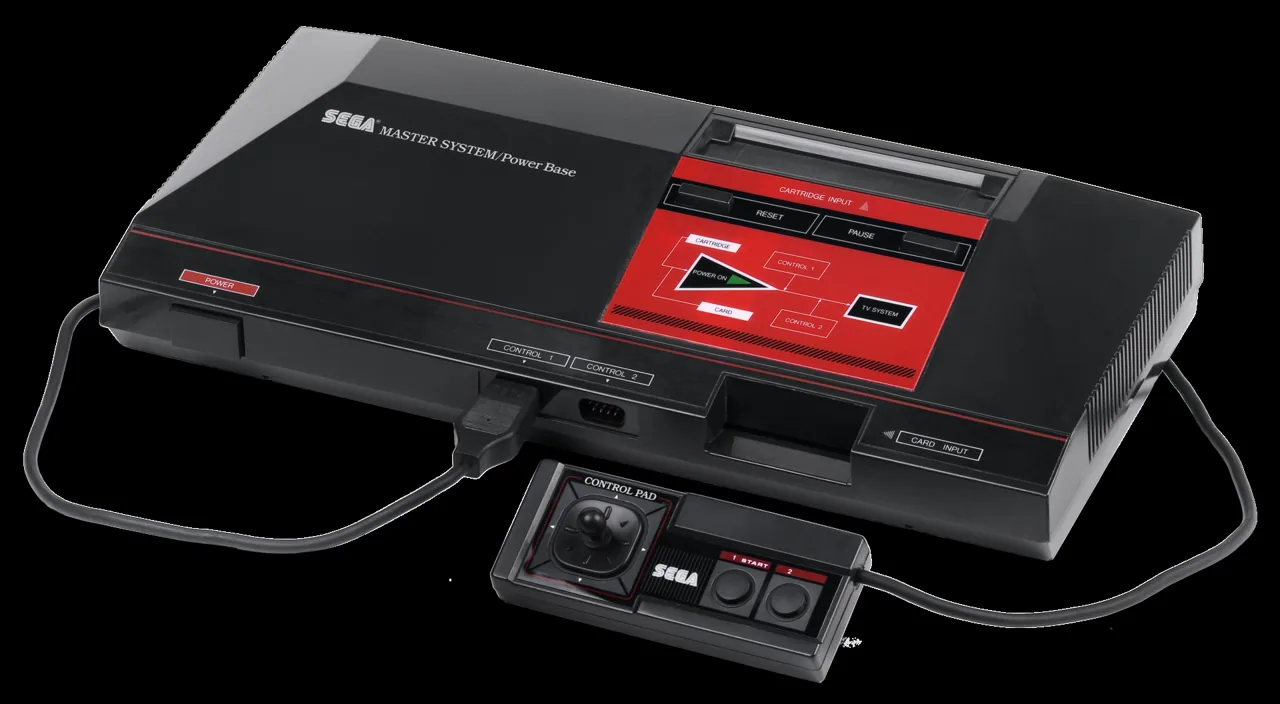
The Master System supports two proprietary media formats: the "MEGA CARTRIDGE" and the "SEGA CARD"37. Both are designated for exclusive use with the Master System, indicating a closed format strategy that persisted across regional variants37. The console includes a physical power switch labeled "ON" and "OFF", a feature retained across multiple documented software releases1237. Input is handled via a device referred to interchangeably as the "Control Pad", "controller", "bedieningsblok", or "Steuerpult", suggesting multilingual packaging and regional distribution289101112.
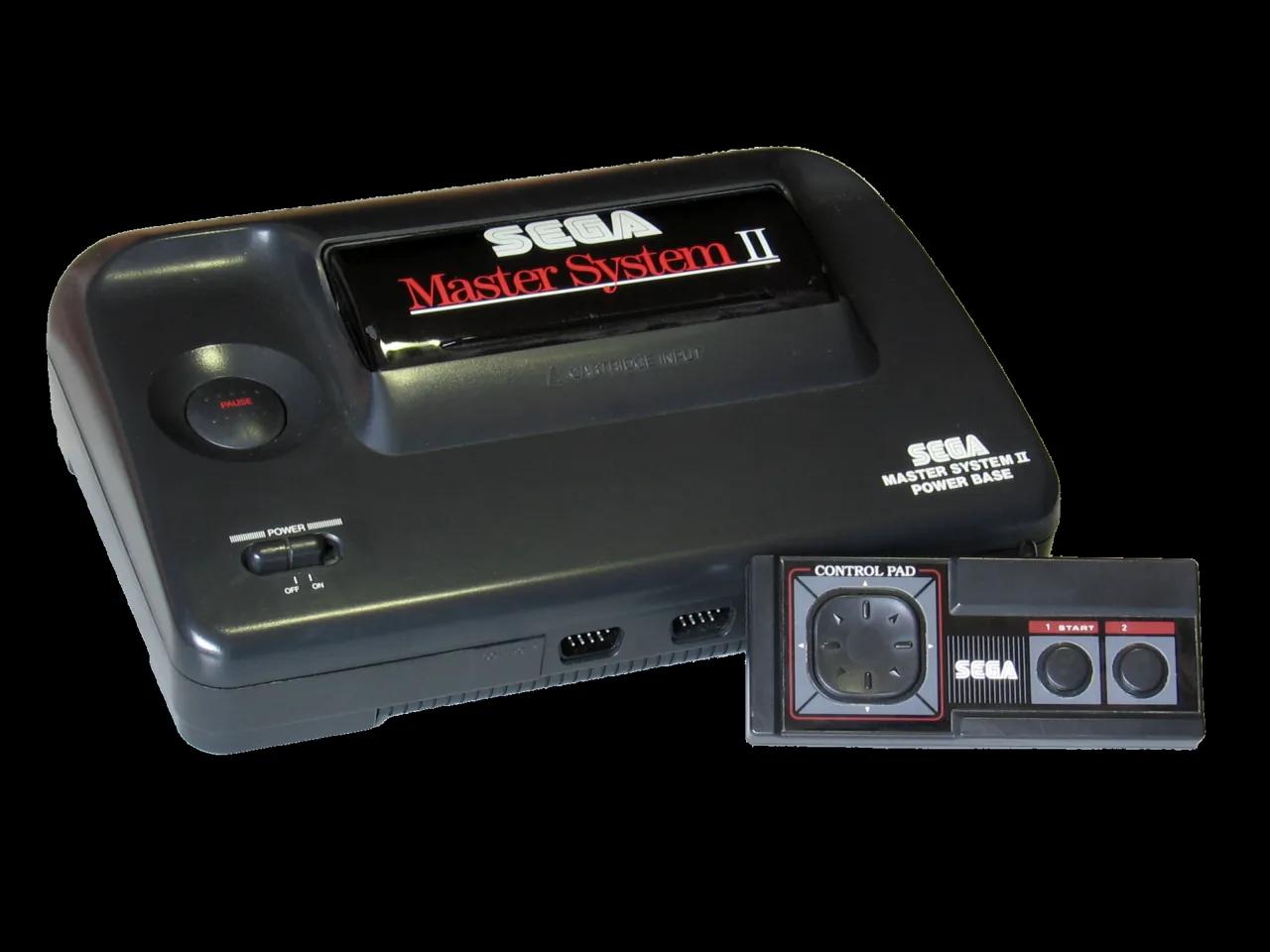
A notable hardware distinction exists between the Master System and its successor, the Master System II. While all previously released Master System cartridges, excluding SEGA CARD titles, are compatible with the Master System II, the 3-D adapter is explicitly incompatible with the later model, rendering 3-D games unplayable1. This indicates a reduction in expansion capability during the revision cycle, a design regression masked as a streamlined form factor in later documentation.
The Master System must also be distinguished from several other Sega-branded systems. It is not the "Sega Master System PLUS", nor the "SEGA SUPER SYSTEM" or "SEGA SUPER SYSTEM PLUS", names which appear in contemporary magazine listings but denote separate configurations or marketing bundles4515. It is likewise distinct from the Sega Megadrive, Game Gear, and Saturn, systems which share branding but not backward compatibility or media formats51314. The Master System includes a "Power Base" component, referenced in at least one European game manual, though its exact function, whether power regulation, signal conversion, or regional adapter, is not detailed in surviving documentation2.
An unusual placement of the pause function appears in the Finnish-language instruction manual for the Master System II: the "taukopainiketta" (pause button) is located on the power supply unit ("teholähteessä")1. Whether this configuration applied to the original Master System is unconfirmed, but its absence in other manuals suggests a revision-specific or region-specific design quirk. The inclusion of Alex Kidd in Miracle World as a built-in title is explicitly tied to the Master System II, not the original unit1.
Cartridges for the Master System carried a 90-day warranty against defects in materials and workmanship, as noted on the packaging for Joe Montana Football16. This warranty applied to the cartridge itself, not the console, and was likely standard across all MEGA CARTRIDGE releases. No warranty duration for the console is documented in the provided sources.
References
- Sega Master System II Instruction Manual 1991 E 8L (1991)
- Ninja Gaiden (Europe)
- Fantasy Zone (Europe)
- Computer & Video Games 102
- MeanMachines 07 Apr 1991 (1991)
- Electronic Gaming Monthly's 1993 Video Game Buyer's Guide (1993)
- Ninja, The (Europe)
- Sonic The Hedgehog 2 (Europe)
- Dr. Robotnik's Mean Bean Machine (Europe)
- Spider-Man vs. The Kingpin (USA, Europe)
- Asterix and the Secret Mission (Europe)
- Lucky Dime Caper Starring Donald Duck, The (Europe)
- MeanMachines 16 Jan 1992 (1992)
- Archive item #237r1
- Computer & Video Games 102
- Joe Montana Football (USA, Europe)