Ohio Scientific
Ohio Scientific manufactured 6502-based microcomputers from the start of the microcomputer revolution, offering modular systems with proprietary bus architecture and a full line of expandable peripherals, with models ranging from the $298 Model 500 board to the $11,090 C3-B Winchester system
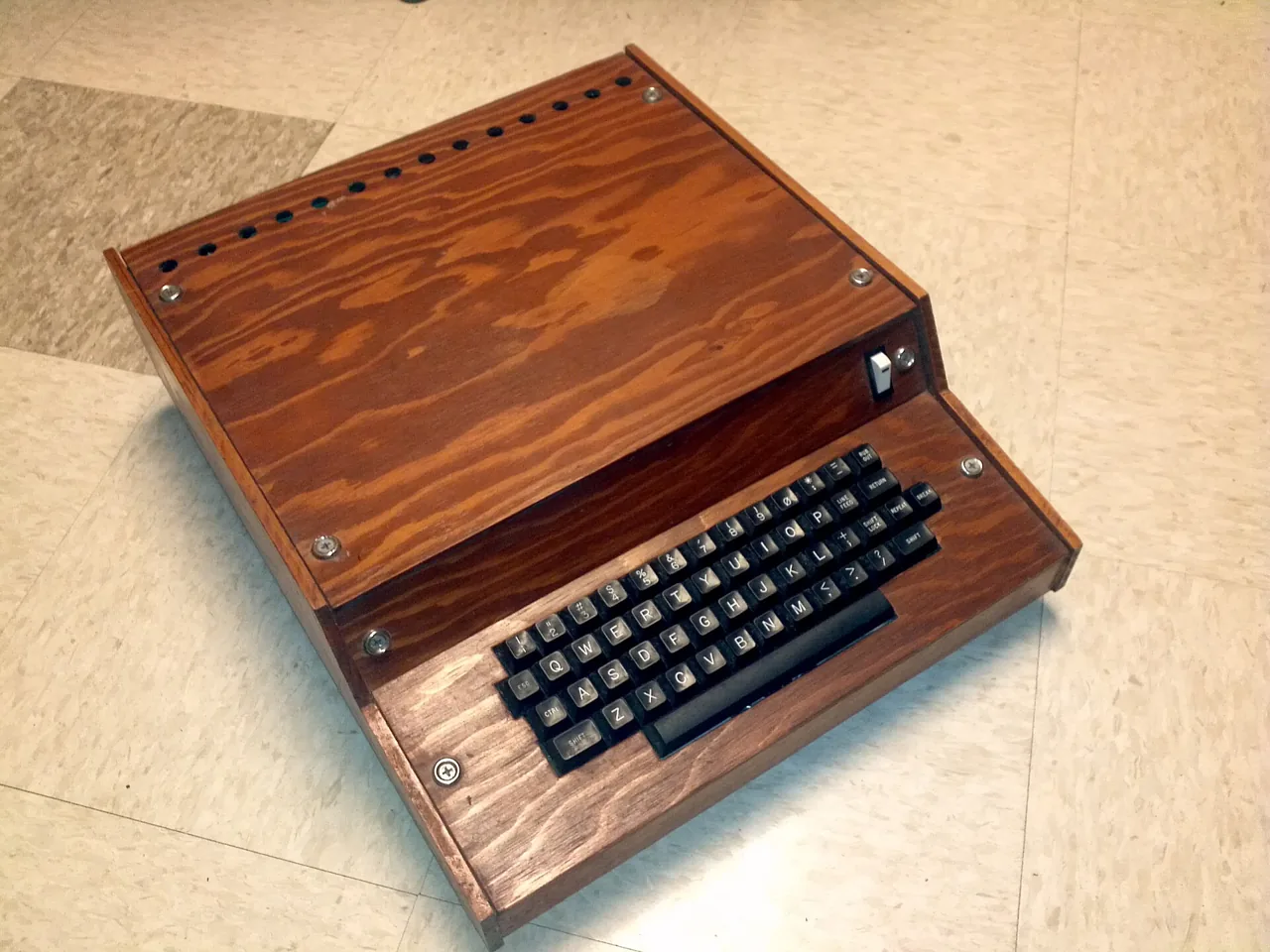
Ohio Scientific positioned itself as a leader in the early microcomputer market by emphasizing modularity, expandability, and performance. The company claimed to be the world's largest full-line microcomputer company by 1978, selling through a network of over 350 dealers worldwide10. Its systems, built around the MOS 6502 microprocessor with 8K BASIC-in-ROM, targeted both hobbyists and small businesses, with a product line that spanned from minimal single-board configurations to fully assembled professional systems equipped with dual 8-inch floppy drives and advanced operating systems310. The company’s address was 1333 S. Chillicothe Road, Aurora, Ohio 442021116.
Architecture & Expansion
The backbone of Ohio Scientific’s design philosophy was the 48-pin Ohio Scientific bus, a proprietary structure composed of four 12-pin Molex-type connectors67. Of the 48 pins, 42 were defined—carrying 20 address lines, 8 data lines, 8 control lines, and 6 power lines—with 6 reserved for future expansion67. The bus supported distributed, fully regulated DC power and was passively terminated, reportedly operating at a bandwidth of approximately 5 MHz67. Notably, it was one of the first microprocessor buses to implement bi-directional data lines, a technical distinction that enhanced communication efficiency between cards67. However, the placement of power lines carried a critical flaw: any improperly inserted board would cause a dead short, risking damage to the system67. Despite this, Ohio Scientific touted the bus as an ultra-low-cost, reliable solution that merged consumer economics with industrial modularity9.
Expansion was central to the product strategy. The company offered 15 system boards in over 40 versions, including rare features such as dual-port memory boards, multiprocessing CPUs, and large-capacity disk systems, innovations competitors reportedly lacked35813. The architecture allowed backward compatibility: original 400 series boards could be plugged directly into the later Challenger IIP, reflecting a deliberate policy of upward expandability5. All professional-series machines used the 48-line bus and modular PC cards, enabling straightforward servicing and upgrades10.
Models & Pricing
The Model 500 board, priced at $298.00, was the company’s lowest-cost offering and required only +5V and -9V power from the user35813. It included 4K of RAM and 8K BASIC-in-ROM, and featured a serial port jumper-selectable for either 20mA current loop or RS-23238. The Challenger IIP, sold fully assembled, retailed for $5985. The C1P Series 2, described as the most cost-effective model in the lineup, included 8K program RAM, software-selectable 24x24 or 12x48 display formats, and sound, music, and voice output via a digital-to-analog converter11. It also featured a switch-selectable port for audio cassette, modem, or printer11. At the high end, the C3-B system incorporated a 74-million-byte Winchester disk and was billed as the world’s most powerful microcomputer, with a price tag of $11,0901516. Professional systems came with at least 48K bytes of RAM and OS-65D or OS-65U operating systems10.
Software & Performance
Ohio Scientific supplied 8K BASIC-in-ROM across multiple models, a version that reportedly won a timing comparison against competitors in the October 1977 issue of Kilobaud Magazine513. The service manual noted that “the 500 is the fastest around,” a claim tied directly to this benchmark513. Additional programming languages were available for in-house software development9. The OS-65U operating system was highlighted for its advanced file structures, communications protocols, and the unique feature of upward compatibility for user programs10. A dealer-generated software library supported disk-based systems, and the company published the bi-monthly Small Systems Journal, a dedicated magazine for owners38.
Market Position & Critique
Ohio Scientific’s aggressive expansion and full-line strategy earned it recognition as a dominant player in 6502-based computing1. However, the company’s proprietary architecture and expansion tactics drew scrutiny. Documentation from 1980 noted a lack of strong second sources for hardware specifications, complicating third-party development and repair67. The same sources suggested Ohio Scientific sought to protect its captive market with whatever means are at its disposal, a veiled reference to the proprietary bus and limited documentation67. While modularity and expandability were strengths, the risk of bus shorts and the absence of open standards ultimately limited broader adoption.
References
- MICRO Vol27-8 80
- micro 35 apr 1981[ocr] (1981)
- BYTE Vol 03-04 1978-04 Robot Simulation (1978)
- 1978 12 BYTE 03-12 Life (1978)
- 1977 11 BYTE 02-11 Memory Mapped IO (1977)
- MICRO Vol31-12 80
- micro 31 dec 1980[ocr] (1980)
- 1978 05 BYTE 03-05 Graphics in Depth (1978)
- MICRO Vol28-9 80
- 1980 04 BYTE 05-04 Printed Software Becomes a Reality (1980)
- micro 29 oct 1980[ocr] (1980)
- 1980 11 BYTE 05-11 High-Resolution Graphics (1980)
- 1978 01 BYTE 03-01 The Brains of Men and Machines (1978)
- MICRO Vol26-7 80
- 1978 10 BYTE 03-10 Chess for the Microcomputer (1978)
- 1978 11 BYTE 03-11 The Sky is the Limit (1978)