Atari 1040ST
Atari Corp. released the 1040ST in 1986 as a 1-megabyte RAM computer with a built-in 1Mbyte double-sided 3½" disk drive, positioning it as a business-capable machine priced at $999.
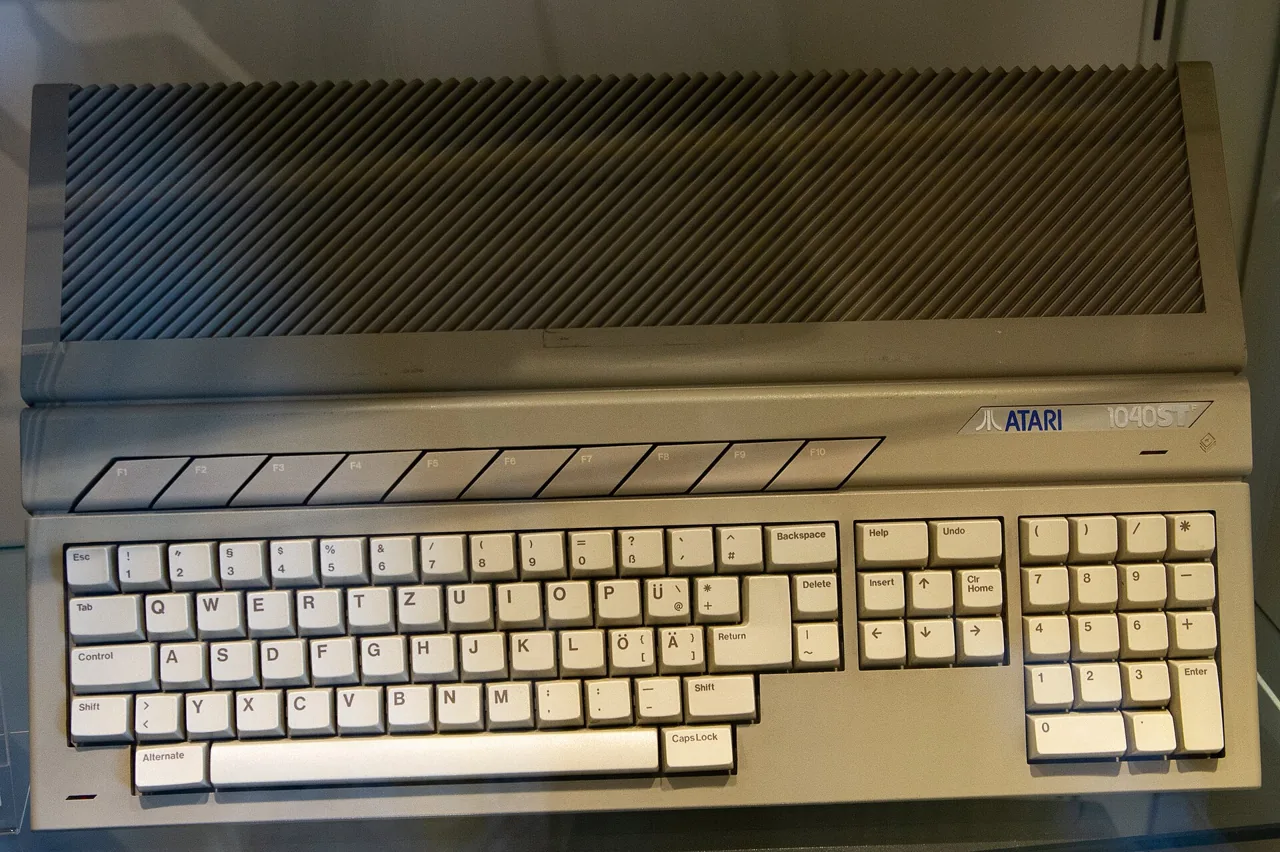
The 1040ST was notable from launch for its memory capacity: 1024 Kbytes of RAM, a full megabyte, which Atari Corp. highlighted as a headline feature across marketing and press16. The machine achieved this using 16 additional 256K-byte dynamic RAM chips on its circuit board, building on the same Memory Controller used in the 520ST, which was capable of managing up to 32 RAM chips or supporting 1-megabit DRAMs for future expansion1. Engineers noted the design left room for systems with up to 4 megabytes of memory1.
Unlike the 520ST-FM, the original 1040ST-F lacked a built-in RF modulator, requiring a monitor for display output and signaling its orientation toward professional applications789. This omission was corrected in the 1040ST-FM variant, which included a modulator allowing direct connection to domestic TVs, along with a bundled lead2479. The modulator remained an optional £49 add-on for the 1040ST-F811, though some dealers reportedly sold the model with one installed515.
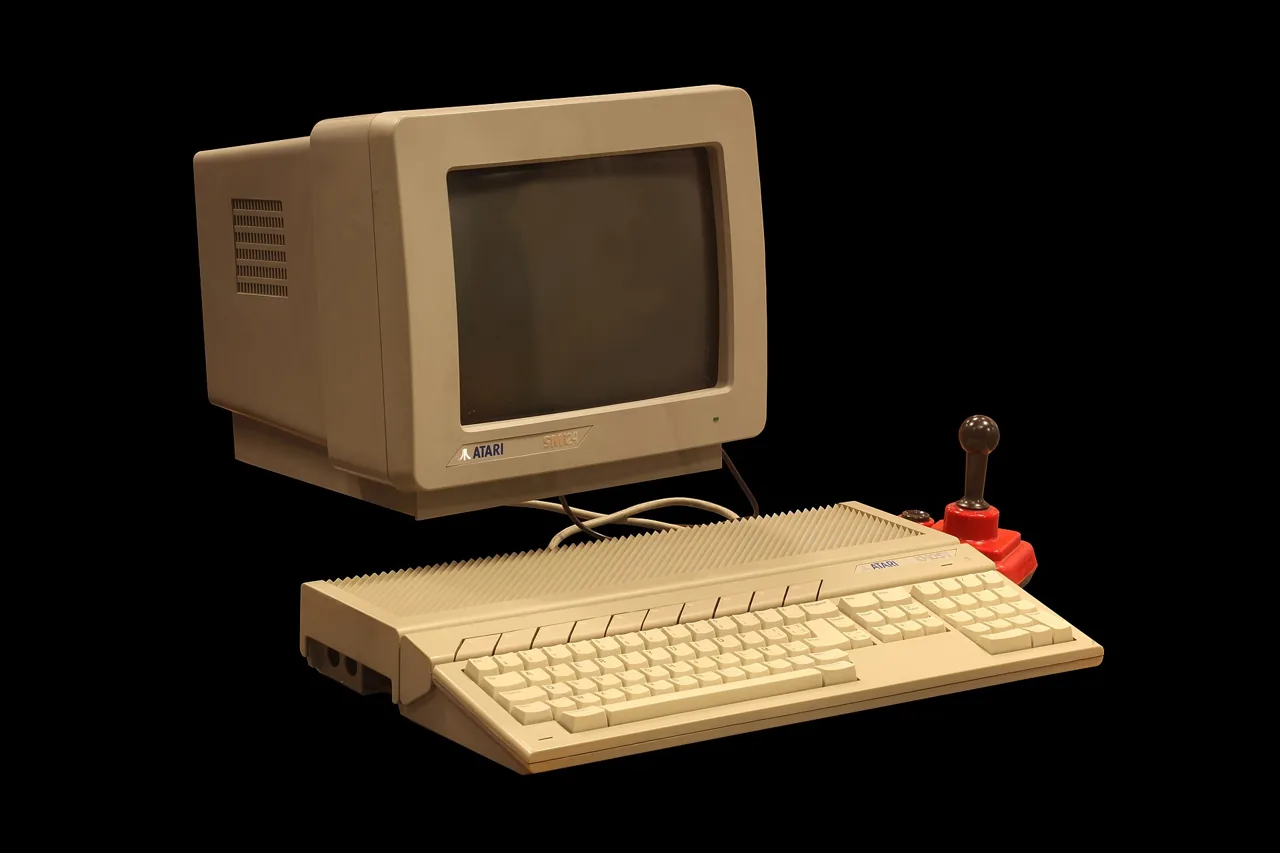
The chassis redesign marked a physical departure: the integrated floppy drive (denoted by the "F") and internal mains transformer eliminated the need for external power bricks, leaving only a single mains lead for both computer and drive3513. This resulted in a more compact, streamlined unit compared to earlier ST models35. With TOS (The Operating System) in ROM for both the 520ST and 1040ST, booting with a nonsystem disk takes less than 6 seconds1.
At launch, the 1040ST-F retailed for £499 (inc VAT)811. In the U.S., it debuted at $999, a figure repeatedly emphasized in period coverage as remarkably low for a megabyte-equipped machine, approximately $1 per kilobyte16. Bundled configurations with monochrome or color monitors were priced at £799 and £899 respectively for the 1040STF13. Later, the "Professional Pack" offered by Silica included the 1040ST-FM with modulator and four software titles: a spreadsheet, database, word processor, and programming language, plus a free starter kit valued at over £20049.
Hardware differentiation extended to connectivity: the 520STFM, 1040ST, and STE models used an eight-pin connector, whereas the original 520ST used an eighteen-pin connector12. An empty socket for a graphics coprocessor was present, though Atari reportedly delayed offering it in initial releases1. The built-in 1Mbyte double-sided 3½" disk drive provided reliable storage, and compatibility with software for the 520ST was explicitly documented14. The Megamater Cable Model 8 allowed use of a Mega ST keyboard with the 1040ST12.
Despite its business orientation, the 1040ST found use in gaming, though reviewers advised the color monitor version for optimal play13. By mid-1987, the 520ST line had transitioned to the 1040ST’s housing, blurring physical distinctions15. The 520STM, a cut-down version of the 1040STF with 512kB of RAM and no bundled monitor, served as the entry point13. The 1040STF was the prize model in Atari’s 1986 refresh, anchoring a family that sustained the ST brand into the 1990s13.
Specifications
| RAM | 1024 Kbytes (1 Mbyte) |
| Storage | Built-in 1Mbyte double-sided 3½" disk drive |
| Operating System | TOS in ROM |
| Connectors | Eight-pin connector |
| Power | Integrated mains transformer (1040ST-F) |
| Release Year | 1986 |
| Base Price | $999 (U.S.), £499 (UK, inc VAT, 1040ST-F) |
References
- Byte Magazine Atari Articles
- Stworldhi037
- AtariUser27-Jul87
- Computer & Video Games 102
- AtariUser26-Jun87
- Antic Vol 5-08 1986-12 Shoppers Guide (1986)
- Computer & Video Games 102
- The Games Machine Issue 04 Mar 88
- ST Action (1990-02) (1990)
- AcornUser047-Jun86
- AtariUser34-Feb88
- ZNET519.TXT.generated
- Computers that made Britain v1
- BrderbundSoftwareCatalog1988 (1988)
- ASTUN Atari ST Users Network 1987-06 (1987)
- atari st user-1989 aug (1989)