Tomy Tutor
Tomy, better known for toys, released the Tomy Tutor in 1983 as a 16-bit home computer aimed at children, featuring a rubber keyboard and extended BASIC in 32K ROM.
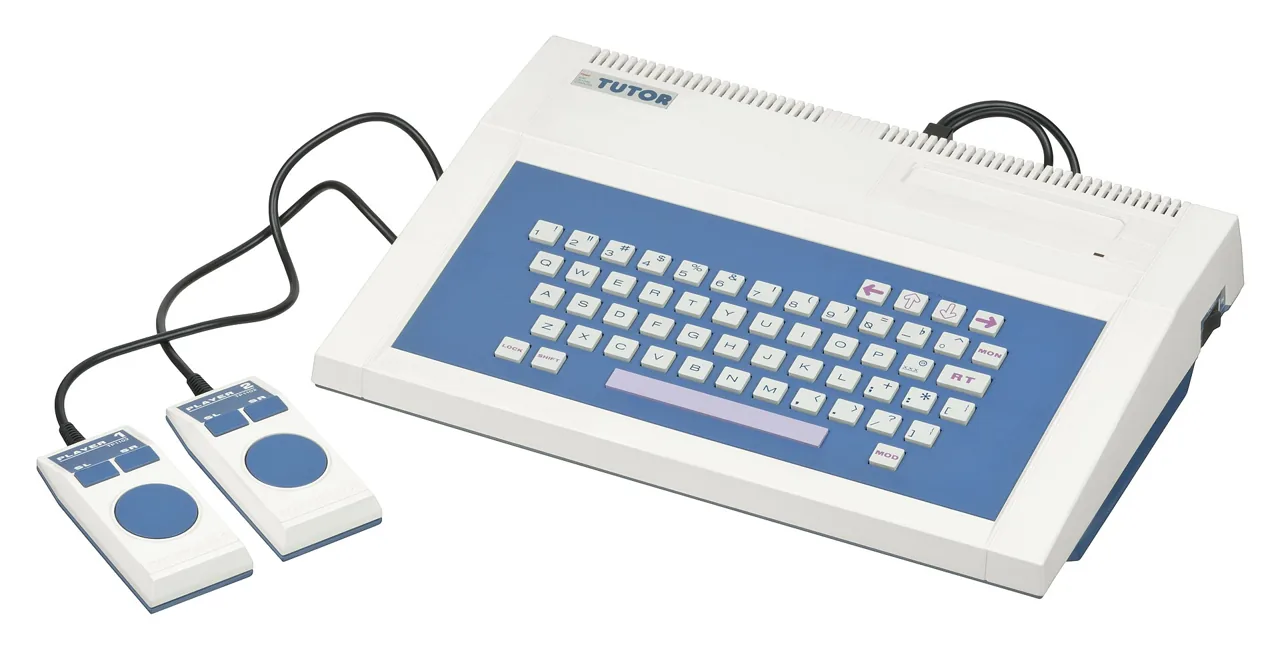
The Tomy Tutor distinguished itself among early 1980s home computers by claiming 16-bit processing through the TI 9995 chip, a rarity in a market dominated by 8-bit designs4. With a 10.7 MHz chip, the architecture enabled performance that, at least in theory, allowed for more sophisticated program execution than contemporaries built on more common processors. Its 256 x 192 pixel resolution, matched with 16 colors, was considered high for the time, and one contemporary magazine noted it as "some of the highest resolution graphics we've ever seen"6. This capability made the machine particularly suited for animated graphics, a feature Tomy emphasized in positioning it for younger users5.
Memory configuration followed a modest but expandable pattern: 16K RAM standard, upgradable to 64K, paired with 32K ROM containing an extended version of BASIC45. The inclusion of extended BASIC in ROM meant users could begin programming immediately without loading software from tape, a significant usability advantage for novice operators. Text was displayed across a 32-column screen, a limitation by professional standards but typical for educational machines of the era4.
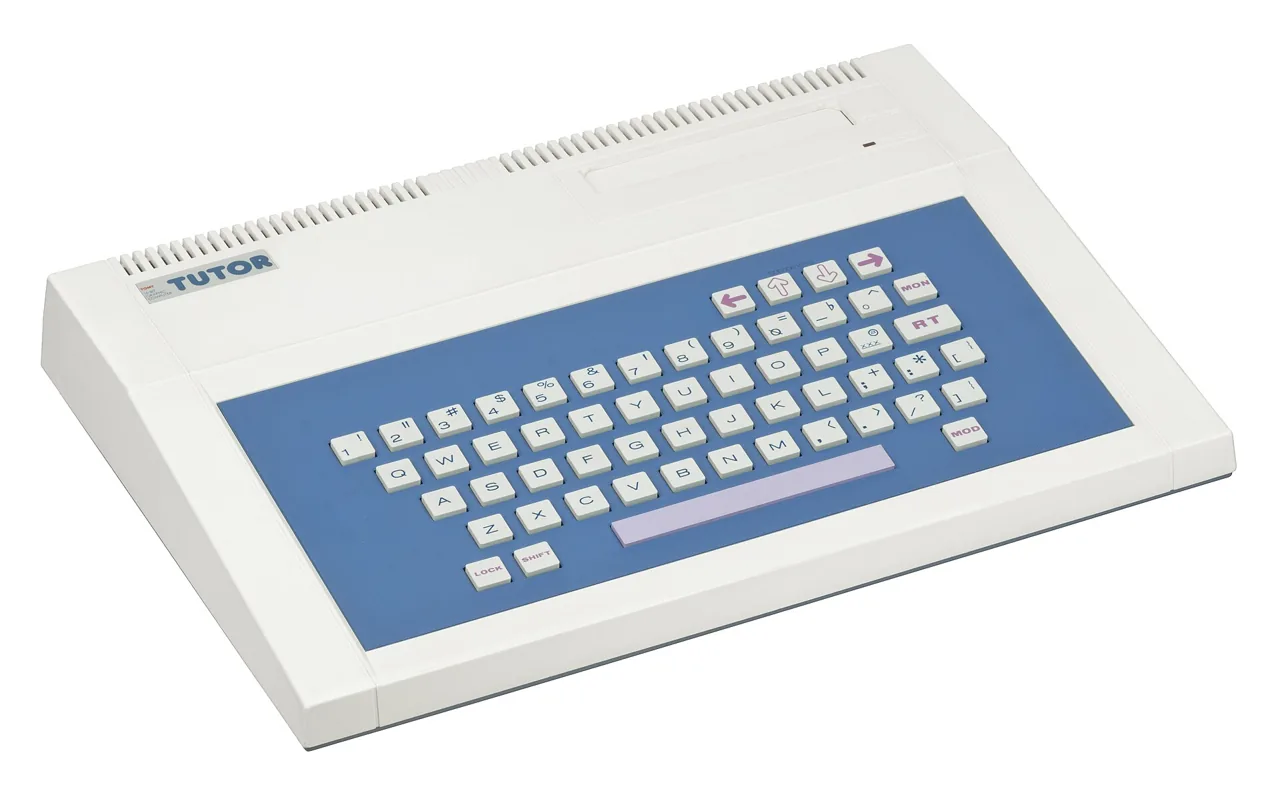
The rubber, half-stroke keyboard, described bluntly as "peanut-butter proof (rather than ergonomic)," reflected Tomy’s toy-making heritage5. Keys were raised and arranged in a standard typewriter layout, supporting both uppercase and lowercase input, a small but meaningful detail for learning environments46. The tactile feedback was minimal, and long typing sessions were ill-advised, but the design prioritized durability over comfort, clearly targeting younger hands and less careful handling.
Audio output relied on three sound generators, each capable of eight octaves, plus a dedicated noise channel, capable of generating musical tones and sound effects alike46. While not as advanced as dedicated synthesizer chips appearing elsewhere, this setup gave developers tools for rudimentary music and game audio. Video output supported both television and monitor connections, increasing flexibility in home setups4.
Storage and expansion were handled through a built-in cassette interface, with a data cassette recorder listed among official peripherals46. A cartridge slot allowed for plug-in software, likely aimed at simplifying access for younger users who might struggle with tape loading procedures. Additional peripherals included joysticks, a voice synthesizer, a disk drive, and a printer, though details on availability and compatibility remain sparse in surviving documentation4.
Priced at $595 at launch, the Tutor entered the market during the post-1983 home computer glut, a period when many new machines failed to gain traction4. Its positioning as a children’s computer with educational software support (backed by a full line of cartridges and programs) suggested a clear audience, but the high price relative to function limited its appeal6. The machine was compact and self-contained, yet its rubber keyboard and unproven software library made it an outlier among serious home computing options.
Despite its technical specifications suggesting ambition, the Tomy Tutor vanished quickly from the market. No discontinuation date or sales figures are recorded in the surviving materials, and the machine left little trace in later computing history. Its legacy rests in its contradictions: a 16-bit processor in a toy-grade chassis, high-resolution graphics behind a 32-column text limit, and educational intent hampered by a steep price. It remains a curious artifact of a moment when toy companies briefly believed they could lead the digital frontier.
Specifications
| CPU | 16-bit TI 9995 chip5 |
| RAM | 16K standard, expandable to 64K46 |
| ROM | 32K with extended BASIC45 |
| Display Resolution | 256 x 192 pixels46 |
| Colors | 164 |
| Text Display | 32 columns4 |
| Keyboard | Rubber, half-stroke, typewriter-style, uppercase and lowercase45 |
| Sound | Three tone generators (eight octaves each), noise generator4 |
| Storage | Cassette interface, cartridge slot46 |
| Video Output | TV and monitor outputs4 |
| Peripherals | Data cassette recorder, voice synthesizer, disk drive, printer, joysticks46 |
| Price | $5954 |
References
- PA-800515 MAC-8 TUTOR Jul79
- 6936938-1 IBM The Guide Fall83-Winter84 Nov83
- Kugram V2N5
- Compute Issue 039 1983 Aug (1983)
- Archive item #198308
- Electronic Fun Computer and Games Vol 01 11 1983 Sep (1983)
- 1984 06 BYTE 09-06 Computers and Education (1984)
- profiles v4n11
- Archive item #19820423
- 1980 05 BYTE 05-05 Floppy Disks (1980)
- 1987.04 Your Computer (1987)
- 1982 08 BYTE 07-08 Logo (1982)
- 1986 08 BYTE 11-08 Object-Oriented Languages (1986)
- 1984 03 BYTE 09-03 Simulation (1984)