Apple II
Apple released the Apple II in 1979 as a home computer with 48K of memory and eight expansion slots, establishing a platform that would sell nearly six million units across all models over the next 16 years.
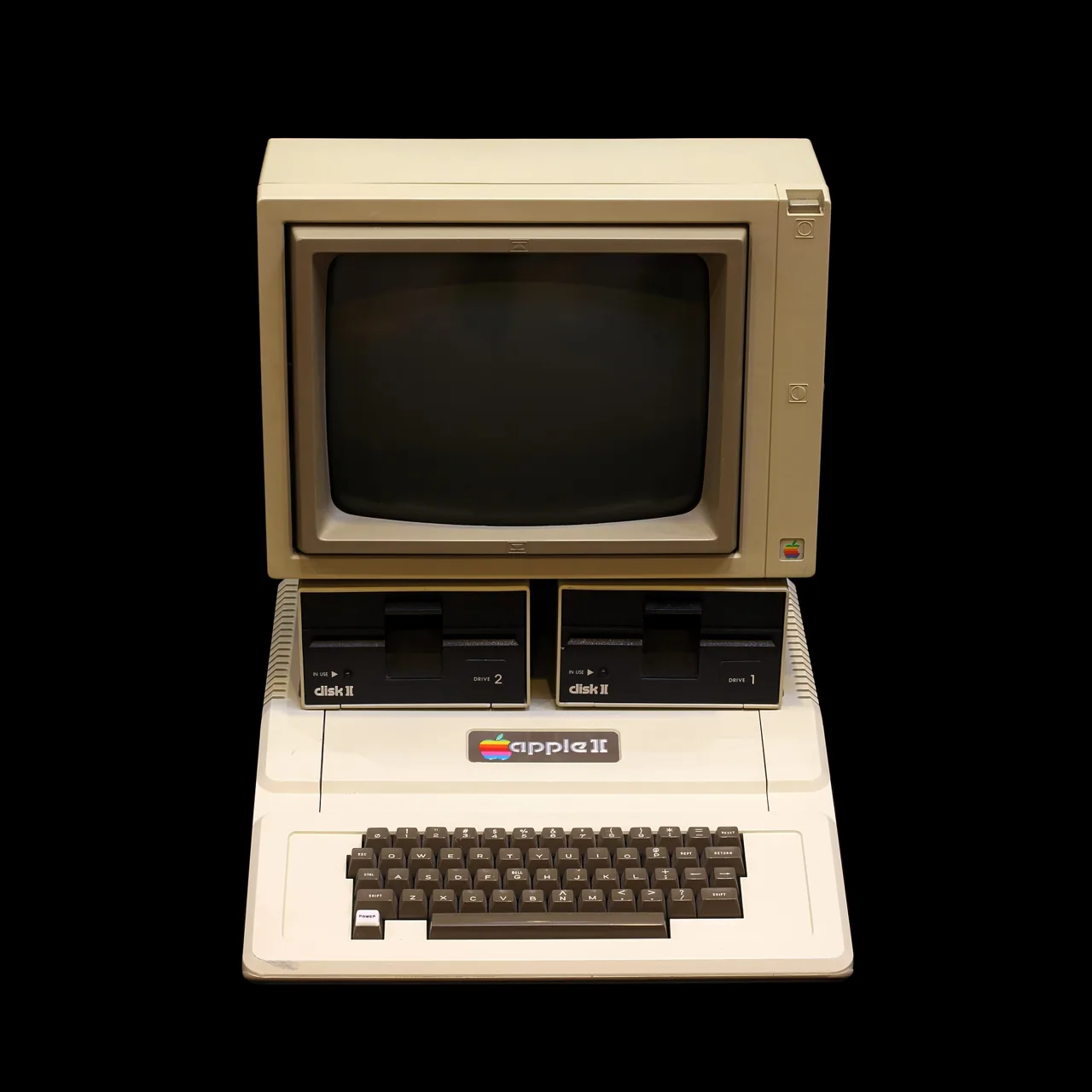
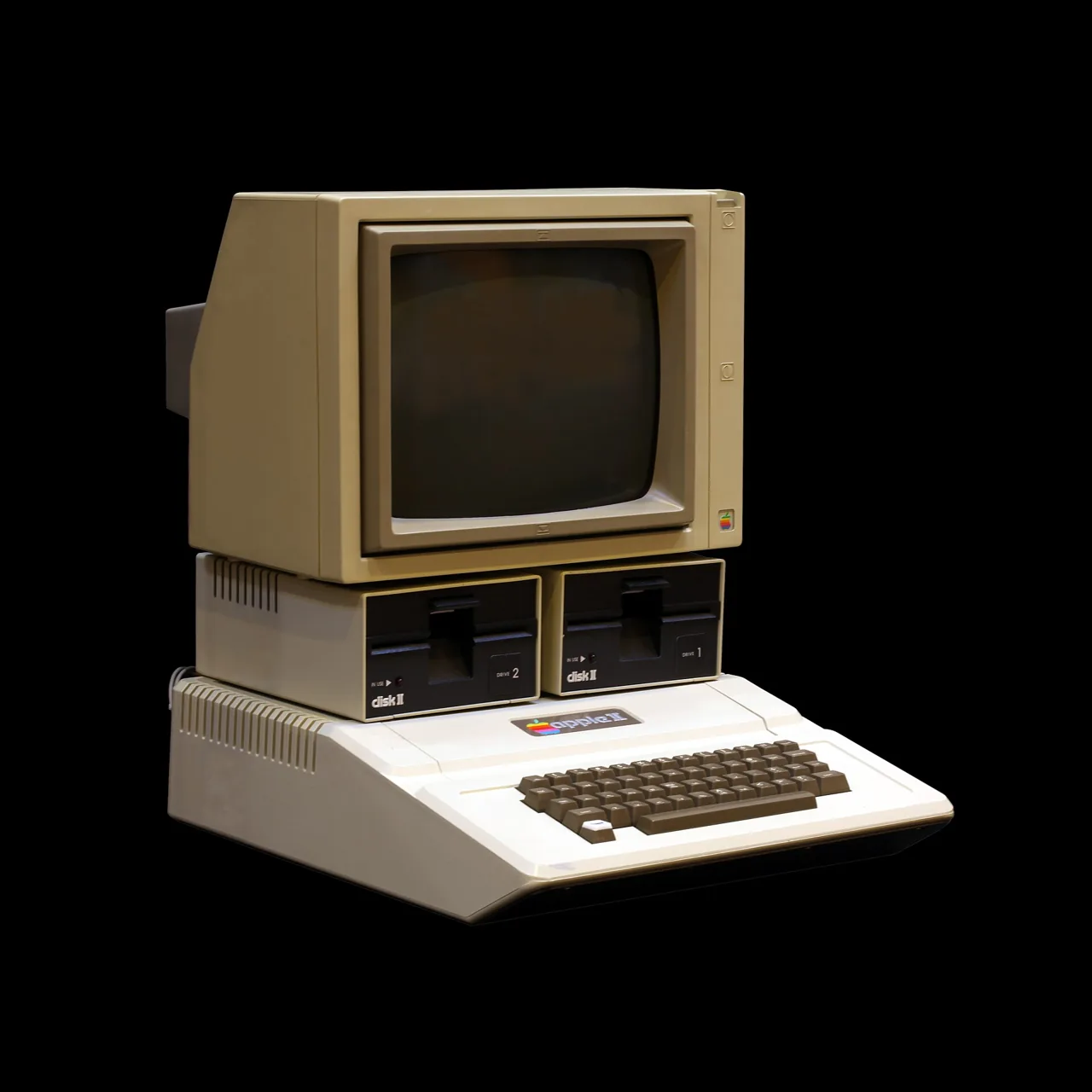
The Apple II arrived in 1979 priced at £1,195, a figure corroborated by contemporary documentation8. The machine shipped with Integer BASIC in ROM, a defining trait distinguishing it from the Apple II Plus, which replaced it with Applesoft BASIC as standard12. Memory configurations ranged from 2K to 64K when expanded with the Language Card, though the standard model included 48K12. It ran DOS 3.3 and supported Applesoft as both an operating environment and programming language12.
Expansion was central to the design: eight slots accommodated peripherals and co-processor boards, including third-party options enabling the system to run code for the 6809, Z80, and 8088 architectures12. The Disk II drive was a common addition, though not bundled as standard, and input devices such as paddles were offered as optional accessories12. By 1982, the system was already five years old in design, yet remained one of the fastest-selling models on the market, a reflection of its flexibility and enduring utility12.
The software library was vast for its time. Titles included VISICALC DISK & BOOK COMPLETE 3.3, DB MASTER, MICROCHASE STOCK CONTROL, and 3D SUPER GRAPHICS, alongside business tools like APPLE BUSINESS CONTROLLER PROGRAM and CCA DATA MANAGEMENT SYSTEM13. Games such as SARGON II, FAST GAMMON, and TANK COMMAND demonstrated its versatility beyond productivity13. Development and user support were reinforced by extensive documentation, including the APPLE II REFERENCE MANUAL, 6502 HARDWARE MANUAL, and BENEATH APPLE DOS13.
Later software releases continued to support the platform well into the 1990s. One 1991 APDA catalog lists a Pascal development package compatible with 64K systems (Apple II and II Plus), 128K Apple Ile models, and the Apple IIGS, with distribution across five 5.25-inch disks and two manuals totaling 504 pages16. The package, priced at $125, carried a disclaimer: Apple II Pascal v. 1.3 and associated tools were “intended for personal enjoyment only” and not for commercial development16. Compatibility extended to the Apple IIGS, and some programs required either two 5.25-inch drives or a single 3.5-inch drive with 64K RAM16.
The Apple II’s commercial impact was transformative. It propelled Apple from a niche builder of hobbyist machines into a professional computing entity, cementing its reputation for high-end systems8. While the Apple III and Lisa faltered, the Macintosh would later achieve iconic status, yet neither displaced the II’s dominance in volume or longevity8. The original Apple II remained on sale for two years, but its architectural lineage persisted through the IIe, which inherited the Apple III’s keyboard and 80-column support via an add-in card8. The line ultimately concluded with the Platinum IIe in 1993, marking the end of a 16-year production run that yielded nearly six million units across all variants8.
The platform’s endurance was matched by its software dominance. In 1982, it already held “the largest software base of any computer on the market today,” a position reinforced by continuous support and cross-model compatibility12. Its design, though aging by 1982, proved remarkably resilient, outlasting many contemporaries through expandability and a thriving third-party ecosystem. The surviving documentation is silent on core technical details such as CPU speed, display resolution, and physical dimensions, but the footprint of its influence is unmistakable in both sales figures and software availability.
References
- Computers that made Britain v1
- micro 50 jul 1982[ocr] (1982)
- ComputingToday198201 (1982)
- Archive item #198308
- APDAlog 199104 (1991)