Commodore VIC-20
Commodore introduced the VIC-20 in 1981 as a low-cost home computer with a full-travel keyboard and built-in BASIC, initially priced at $300 before aggressive price cuts transformed it into one of the best-selling computers of its era3.
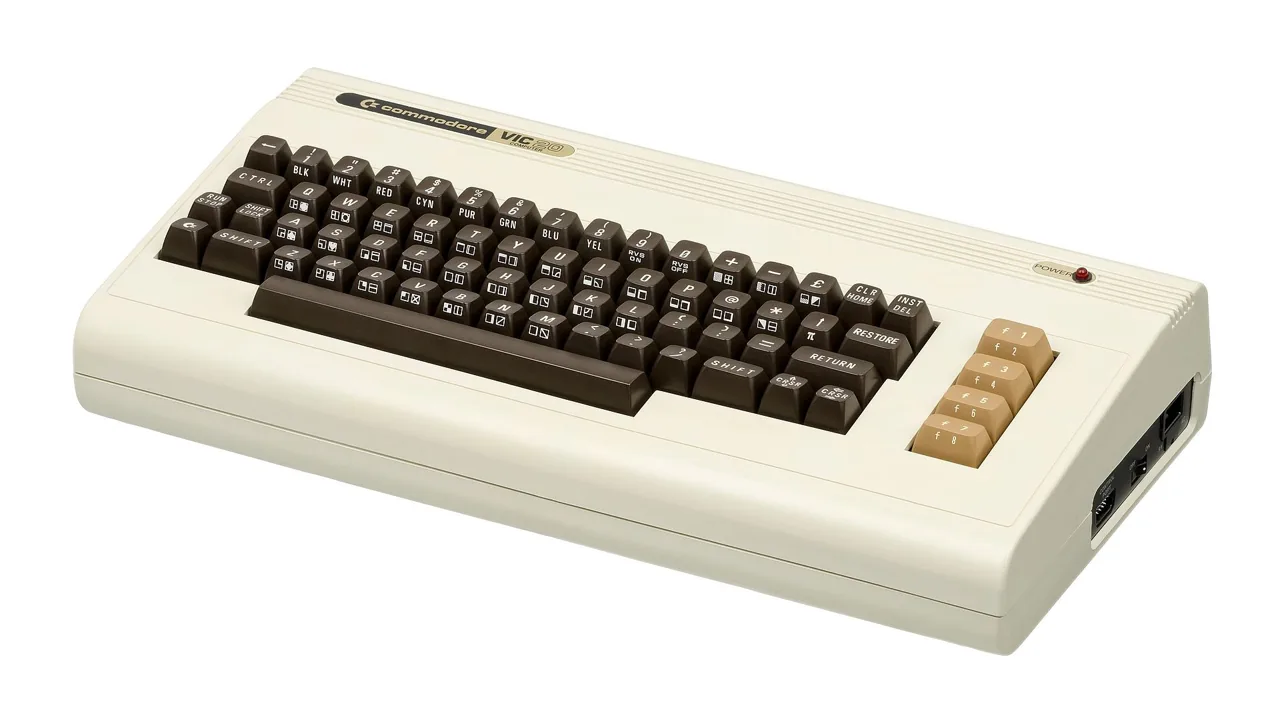
The VIC-20 was built around the MOS Technologies 6502A microprocessor, the same CPU found in systems like the Apple II and Atari home computers, though the documentation is silent on clock speed or bus architecture3. It shipped with 20K of ROM containing a full BASIC interpreter, a notable inclusion at a time when many budget machines required users to load BASIC from external media3. The amount of RAM in the unexpanded unit remains unclear due to garbled text in the surviving service documentation, though expansion was possible via add-ons such as the VIC-1110 or the partially documented VIC-1111 16K memory expander1. When expansion RAM was installed beginning at address $2000, screen memory was relocated to $1000; in unexpanded units, it resided at $1E001.
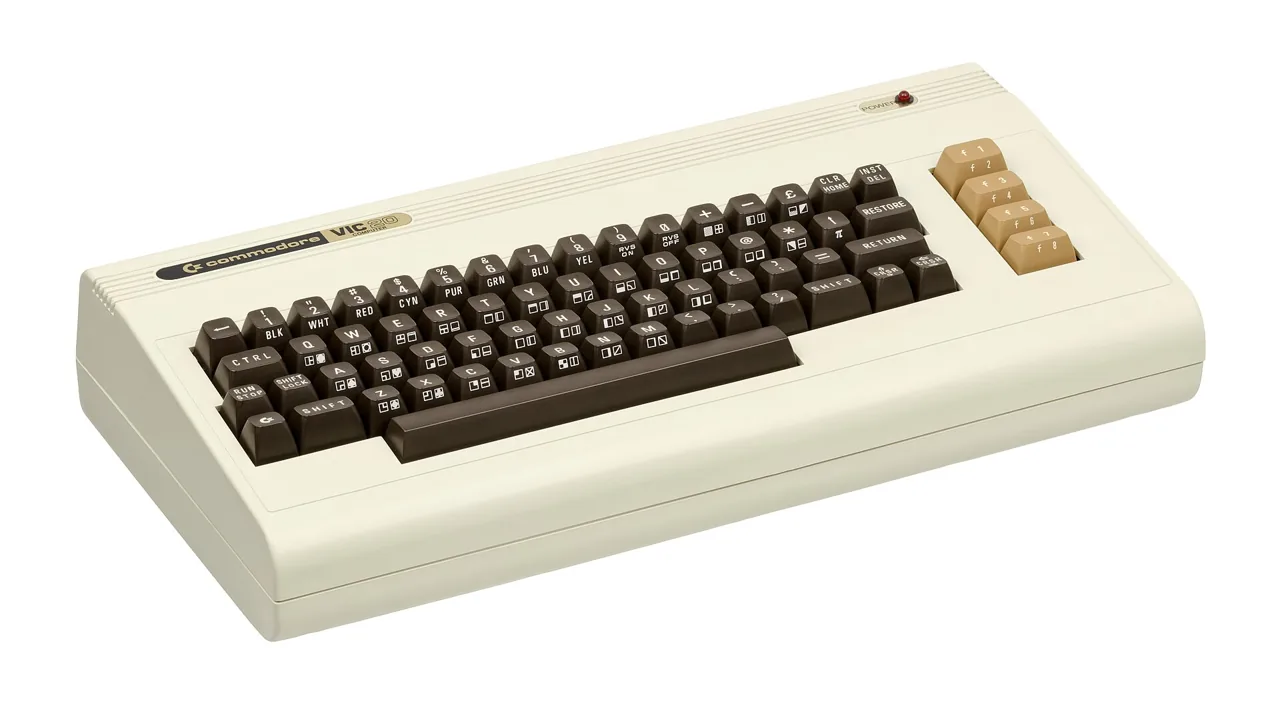
The display presented a fixed grid of 25 rows by 22 characters, with each row’s memory address incremented by 22 ($16) from the one above1. While one peripheral document cites "320 líneas horizontales," this refers to an external device, not the VIC-20’s native video output12. The keyboard featured 60 full-travel keys and four special-function keys, with Commodore’s distinctive shift mechanism allowing direct entry of graphics characters, a usability quirk that divided users but enabled immediate visual programming3.
Software arrived on cartridge, cassette tape, or diskette when paired with an optional drive, though the cassette recorder was by far the most common storage method3. The rear panel offered a dense array of proprietary connections for monitors, printers, cartridges, modems, and storage devices, but notably lacked industry-standard ports. This was a deliberate cost-saving move that forced users to adopt interface cartridges like the VIC-1011A RS-232C for standard serial communication13. Expansion was further supported through a dedicated port accepting memory modules and other enhancements9.
At launch, the VIC-20 struggled, hampered by its $300 price and limited software library3. By mid-1982, the manufacturer’s suggested retail price had dropped to $110.00, and units soon sold for under $100, catalyzing mass adoption73. This pricing pivot, combined with an expanding ecosystem of peripherals and software, reversed its early reputation as a commercial disappointment and propelled it into the ranks of the best-selling computers of all time3. Contemporary reviews were effusive: BYTE called it "unexcelled as a low-cost consumer computer," while Popular Mechanics declared it "the only game in town" at around $3007. COMUTE! Magazine echoed the sentiment, labeling it "an astounding machine for the price"7.
Despite its success, compatibility with later models was deliberately limited. The Commodore 64, initially rumored to be called the "VIC-64," was rebranded to avoid consumer confusion and to highlight its incompatibility with the VIC-208. Only a narrow subset of disk-based software (specifically programs designed for hybrid VIC-20/64 systems) could be shared, and such titles were rare8. A peripheral advertised as compatible with both the VIC-20 and Commodore 64 confirms that such cross-platform support existed in limited form, but the machines were otherwise distinct ecosystems12.
References
- Top Down Assembly Language Programming For Your VIC-20 and C64 1984 McGraw-Hill (1984)
- Introducing IBM PCjr
- 1982 08 BYTE 07-08 Logo (1982)
- Electronic Games Issue 19 Vol 02 07 1983 Sep (1983)
- MICRO Vol57-02 83
- Club Commodore 15
- Compute!'s Commodore Peripherals, A Users Guide