Panasonic FS-A1ST MSX-turbo-R
Panasonic’s first implementation of the MSX Turbo R standard featured a 28.6 MHz R800 microprocessor and shipped with a suite of bundled software, documentation, and promotional items including a T-shirt and a one-year disk magazine subscription.
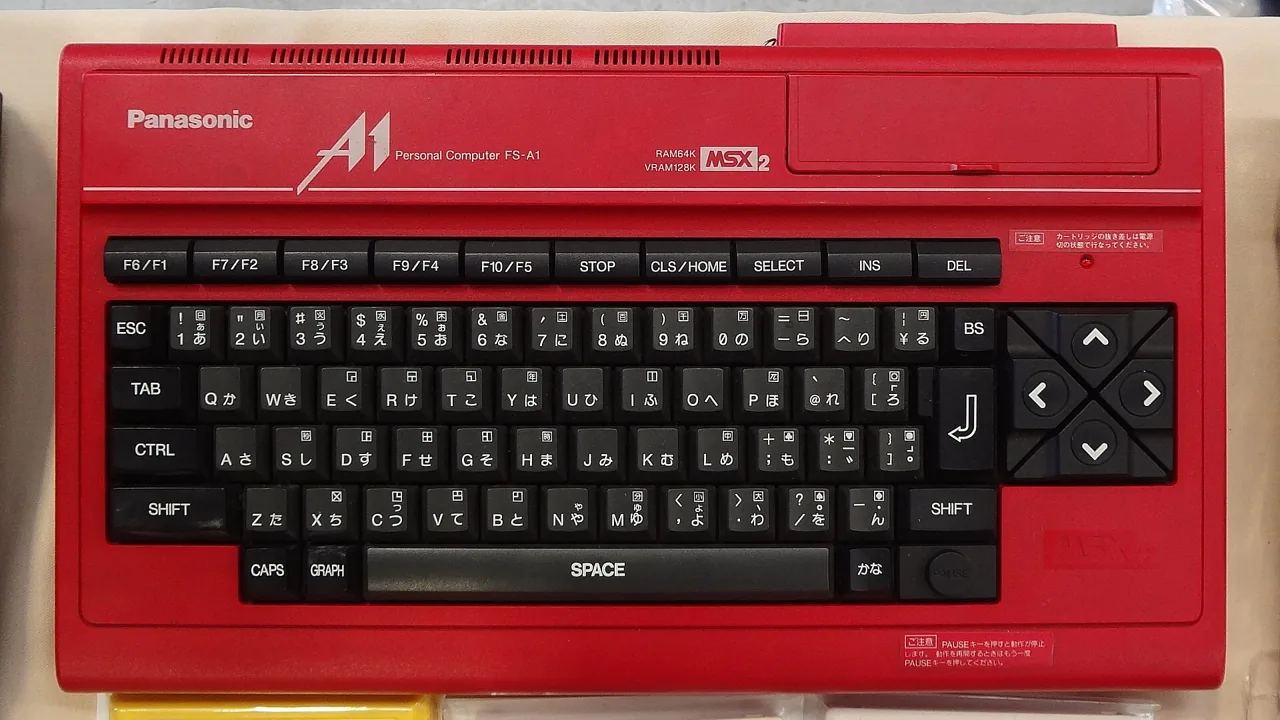
The FS-A1ST MSX-turbo-R stood as the inaugural machine to implement the MSX Turbo R standard, a designation noted in contemporary reporting as a definitive step beyond the MSX2+ generation1011. Long speculated upon in enthusiast circles, the successor to the MSX2+ had been the subject of rumor involving processors like the Z800, but instead materialized around the R800, a 16-bit processor running at 28.6 MHz1011. The chip, later identified in documentation as part of the E4 series used in MSX turboR systems, formed the core of a machine marketed not only for speed but backward compatibility1213.
Specs placed the FS-A1ST firmly at the high end of the MSX ecosystem: 256 KB of user RAM, 128 KB of video RAM, and 16 KB of S-RAM provided headroom over earlier models23. It included MSX BASIC 4.0, MSX-DOS 1.00/2.30, and DISK BASIC 1.00/2.01, supporting file interchange with MS-DOS systems, a notable practical advantage for users navigating cross-platform workflows2345. The machine shipped with four demo diskettes, a shortened Dutch instruction manual, a 3-month warranty certificate, and a one-year subscription to ClubGuide, the disk-based magazine from Stichting GENIC2345. Curiously, a Panasonic MSX-turbo-R T-shirt was also included in the box, a promotional touch uncommon in technical hardware bundles2345.
Hardware features included a built-in digital PCM sampler and microphone, alongside a microphone input jack, suggesting an intent to support audio applications beyond gaming2345. Video output supported RGB, S-VHS, and AV, ensuring compatibility with a range of display equipment common in European households at the time2345. The keyboard comprised 96 keys and included a dedicated pause key, a minor but ergonomic consideration for users running long processes or games2345. A real-time clock chip enabled time-stamped operations, a feature absent on many earlier MSX systems2345.
Expansion options were clearly emphasized in promotional material. The system could be upgraded from its base 256 KB to 512 KB of RAM, and supported connection of a second disk drive2345. MIDI capabilities were listed, aligning the machine with music production workflows, while future-facing options like video digitizing, hard disk storage, and CD-Interactive were mentioned as potential add-ons45. The system was explicitly declared fully MSX compatible, and reviewers noted it introduced no compatibility issues for users upgrading from MSX2 or MSX2+ systems2367.
Marketed with fanfare in Japanese publications, the FS-A1ST was positioned as Panasonic’s flagship entry into the next phase of MSX computing1011. Its launch pricing in the Netherlands was Fl.1795,- including BTW and shipping, with an introductory rate of Fl.1595,- for orders placed before 1 May 19912345. For advance payments, the price was Fl.1695,-; for cash-on-delivery orders, Fl.1795,-1. Availability was coordinated through Genic and MSX Engine, both named as distribution points in the Netherlands67.
A successor model, the Turbo R FS-A1 GT, appeared in listings by February 1993 at a price of Fl.1750,-, suggesting a limited but persistent market presence beyond the initial launch window89. The HCC (Hobby Computer Club), a key arbiter of Dutch home computing opinion, expressed satisfaction with the system, describing the FS-A1ST as not only feature-rich but “oerdegelijk” (rock-solid in build and execution)67. That assessment carried weight. In a market segment often defined by cost-cutting and marginal reliability, a reputation for solidity was a rare and valuable distinction.
Despite its technical merits, the FS-A1ST arrived late. By late 1991, the broader home computer market was shifting toward 16-bit systems with more expansive software ecosystems. The decision by ASCII, the steward of the MSX standard, to abandon sequential naming confirmed the successor would not be called MSX3, reflecting an attempt to reframe expectations amid a waning platform lifecycle1011. The FS-A1ST, while technically impressive, became a high-water mark rather than a turning point: the most advanced MSX machine available, yet one that ultimately served a shrinking, albeit devoted, user base.
Specifications
| CPU | R800 microprocessor, 28.6 MHz |
| User-RAM | 256 KB |
| Video-RAM | 128 KB |
| S-RAM | 16 KB |
| MSX BASIC | 4.0 |
| MSX-DOS | 1.00 / 2.30 |
| DISK BASIC | 1.00 / 2.01 |
| Graphics | Hardware scroll, 19,268 colors |
| Sound | MSX MUSIC, digital PCM sampler |
| Keyboard | 96 keys, including pause key |
| Storage | 360 KB / 720 KB disk drive |
| Video Output | RGB, S-VHS, AV |
| Clock | Real-time clock chip |
| Expansion | RAM expandable to 512 KB, second disk drive support, MIDI |
| Power | 220 volt |
| Compatibility | Fully MSX compatible, file compatible with MS-DOS |
| Special Features | Built-in microphone, microphone input, international character set, built-in word processing set |
References
- msx computer magazine 47 jun 1991 (1991)
- msx computer magazine 45 mrt 1991 (1991)
- msx computer magazine 45
- msx computer magazine 46 mei 1991 (1991)
- msx computer magazine 46
- msx computer magazine 51 jan 1992 (1992)
- msx computer magazine 51
- msx computer club magazine 58
- msx computer magazine 58 feb 1993 (1993)
- msx computer magazine 41 okt 1990 (1990)
- msx computer magazine 41
- msx computer club magazine 65
- msx computer magazine 65 feb 1994 (1994)