Msx Yamaha CX5M
Yamaha's attempt to sell a synthesizer to computer buyers and a computer to synthesizer players, a gamble that worked better in bedrooms than in shops.
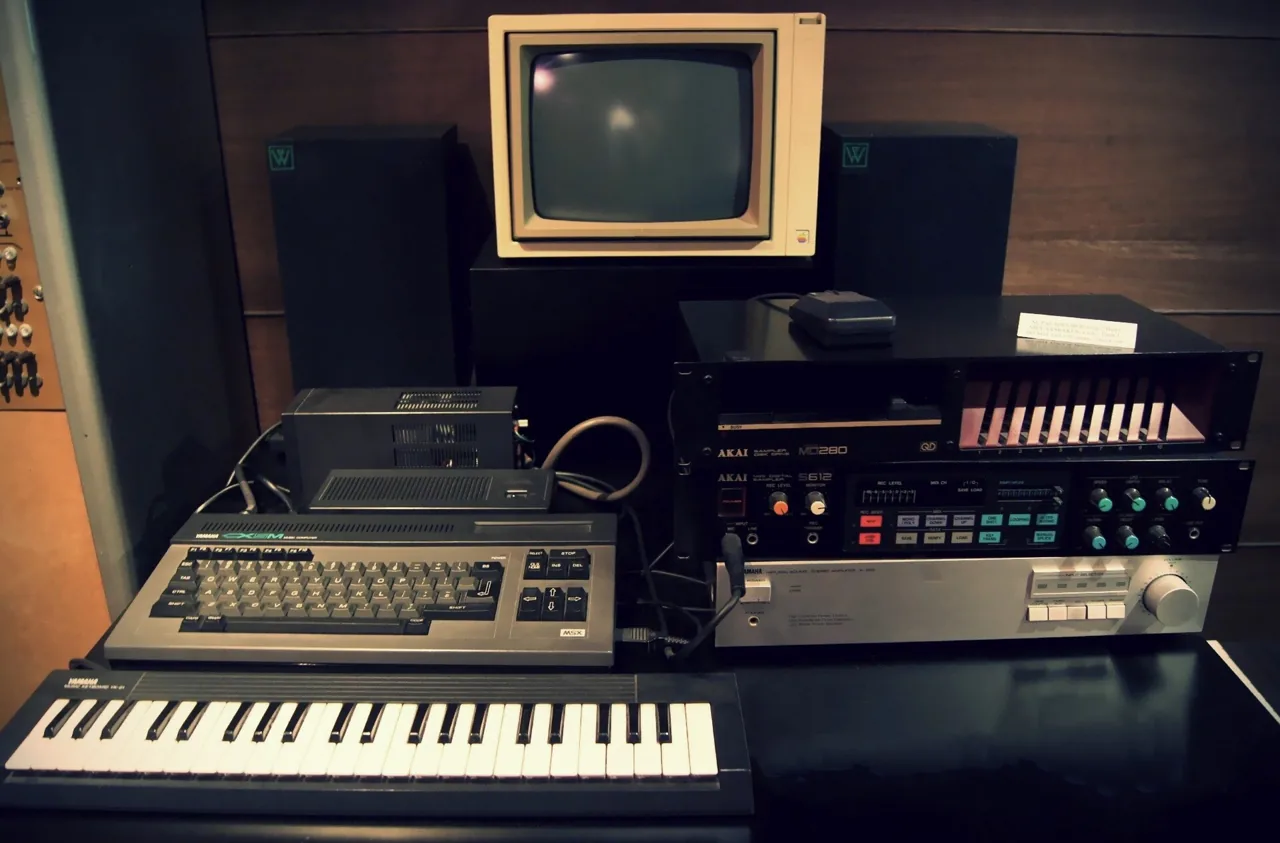
The Yamaha CX5M Music Computer occupies a peculiar niche: it is a standard MSX1 machine with a synthesizer unit grafted on.4 Yamaha described the complete package as offering "everything an MSX machine has to offer: user friendly Basic, good graphics, 16 colours, with the added bonus of a built-in synthesizer/keyboard."2 That framing tells you everything about Yamaha's priorities. The computer part is the bonus. The synthesizer is the point.
The machine was, by its own era's reckoning, expensive. A price of around £500 put it in a bracket where the pitch had to be compelling, and the pitch was straightforward: for anyone wanting both a micro and a synthesizer, "the Yamaha is the one to get."12 For anyone who just wanted a home computer, the proposition collapsed. Reviewers noted bluntly that a buyer with no interest in electronic music could find a comparable MSX machine for less than half the price.1
The Machine Itself
Processor is a Z80A, running at a clock speed documented as 3.579 MHx in the surviving sources (almost certainly a garbled OCR rendering of MHz, though the precise figure is recorded as-is).2 RAM is listed at 28K in one source2 and 32Kb in others.67 The discrepancy is unresolved in the surviving documentation. ROM size and USERAM figures appear as separate fields in the original source but the values did not survive OCR intact.2
Display runs at 256 × 192 pixels in 16 colours, with a text mode of 40 × 24 characters, upper and lower case.2 Standard MSX territory. The keyboard situation is less standard: the CX5M ships with both a typewriter-style 73-key unit and a 49-key piano-style music keyboard.2 Two keyboards, two use cases, one machine.
The sound hardware is where the CX5M separates from the rest of the MSX field. The standard MSX-compatible voice comes from a YM2149, rated at 8 octaves and 8 notes.2 The CX5M's operating system is reportedly based on that used in the DX7 synthesiser,1 and the machine ships with 46 preprogrammed polyphonic synth voices and 6 rhythm patterns built in.2 The underlying sound generation technique is described in Dutch-language coverage as Carrier Modulator, the synthesis method applied in the Yamaha.45 One source calls it simply "a very special sound chip."8
I/O is generous. The port list runs to: MSX cartridge, parallel port, printer port, sound, video, RF, music keyboard port, MIDI in and out, left and right audio, and two joystick ports.2 The MIDI ports alone made the CX5M interesting to anyone running external gear. Yamaha also offered the CR-01 magnetic card reader as a peripheral, though it required a specific cartridge and the appropriate magnetic cards to function at all.8
Software: Bundled, Limited, Promised
Three music programs ship with the machine.2 The FM Music Composer is the centrepiece.1 The FM Voicing Program arrives on cartridge and is described as an extended version of the Composer.1 Among the available software for the CX5M are a MIDI Recorder program, a Graphic Artist program, and a word processor called TeleWord, a registered trademark of Yamaha International Corporation.3
Contemporary reviewers were not entirely satisfied. The modulation programs were called "a little limited," with one critic noting it was sometimes hard to discern any noticeable change in the sound of a note.1 The methods Yamaha chose for altering synthesis parameters were described as adequate but "at times cumbersome."1 The broader verdict was harder still: "the software does not fully exploit the capabilities of the machine."1 Yamaha reportedly acknowledged this, with the company saying updated software was on the way.1 Whether that software arrived, and what form it took, the surviving documentation does not say.
As a general-purpose computer the CX5M relied on other MSX manufacturers' software, since Yamaha itself supplied only dedicated music titles.2 The machine was compatible with the larger MSX software library,2 and the base price of the computer reportedly held steady from its debut.3
Market Fate
The CX5M's commercial trajectory varied by market and, critically, by who was selling it and how. In the Netherlands the machine reportedly never gained real traction. The importer chose to position it as a musical instrument rather than a computer, which apparently cost it the computer-buying audience without fully capturing the instruments market.45 The machine did, however, find its way to dedicated computer music enthusiasts.45 The Tilburg CM-Group, a seven-member collective, worked with the CX5M to make computer music both individually and as a group, a small but real community forming around the machine's specific strengths.45
One contemporary source called it "Yamaha's entrant in the MSX stakes"10 and predicted the machine was "destined to become a cult computer."1 That prediction proved more accurate than most: the CX5M is remembered not as a mass-market success but as a machine that a specific kind of buyer (someone who already thought in terms of FM synthesis and MIDI) found genuinely hard to replace. It was obviously aimed at people who wanted a home computer and also had an interest in electronic music.1 That audience existed. It was just smaller than £500 pricing required.
| Manufacturer | Yamaha |
| Type | MSX1-compatible music computer |
| CPU | Z80A |
| RAM | 28K (reportedly 32Kb per later sources) |
| Display | 256 × 192 px, 16 colours; 40 × 24 text |
| Sound | YM2149, 8 oct. / 8 note; 46 built-in poly voices; 6 rhythm patterns |
| Keyboard | 73-key typewriter + 49-key piano |
| MIDI | In and Out |
| Language | MSX BASIC |
| Original price | Around £500 |
References
- The Home Computer Advanced Course 52
- NZ-bits-and-bytes-issue-4-01
- 1986 06 BYTE 11-06 Computers and Music (1986)
- msx computer magazine 09 jul aug 1986 (1986)
- msx computer magazine 09
- msx computer magazine 12 dec 1986 (1986)
- msx computer magazine 12
- msx computer magazine 16 aug 1987 (1987)
- PersonalComputerNews099-16Feb1985 (1985)