Timex Sinclair 2068
A short-lived American reimagining of the Sinclair Spectrum, burdened by corporate indecision but rescued by a loyal few who patched its gaps with ingenuity and third-party grit.
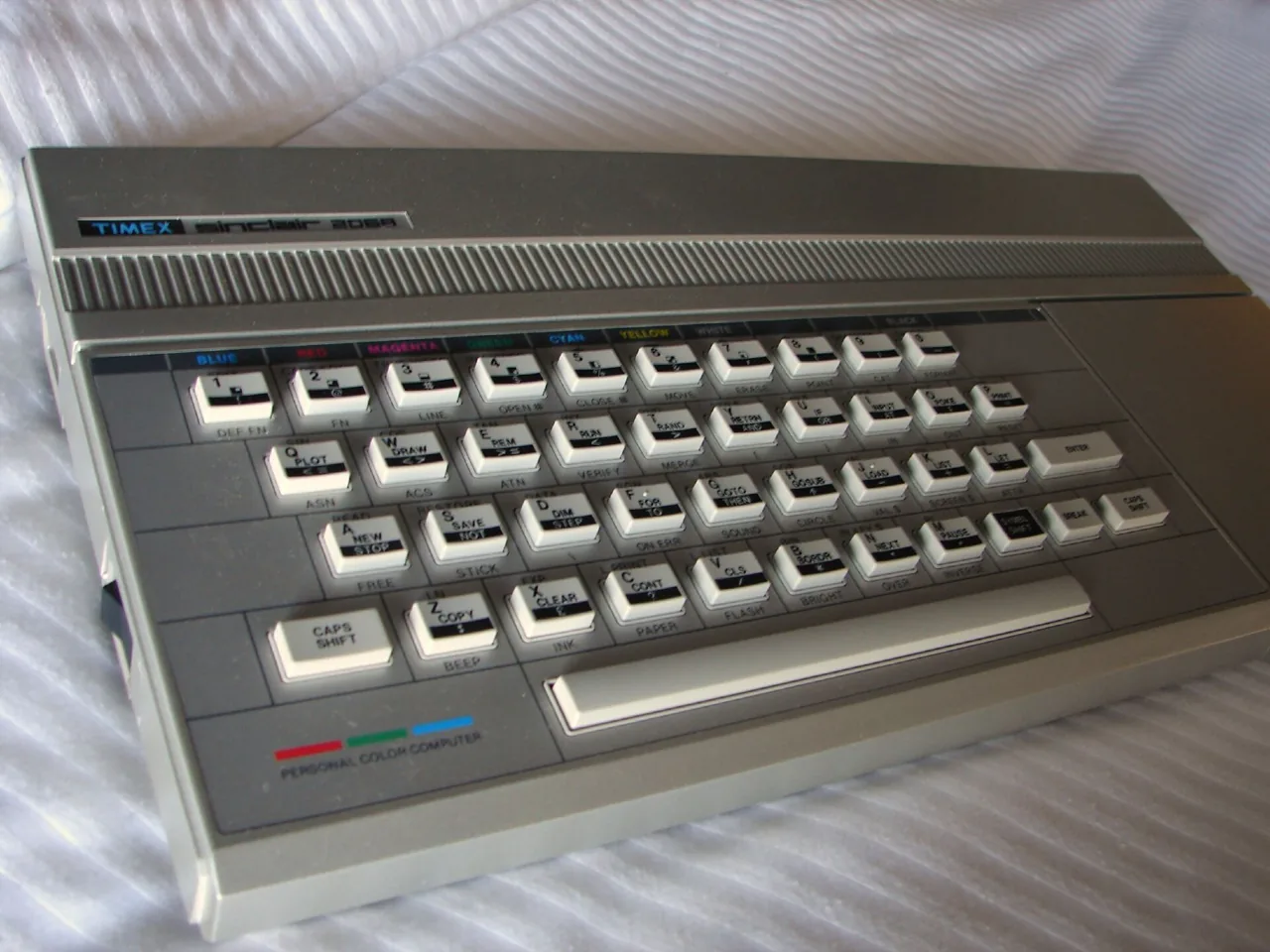
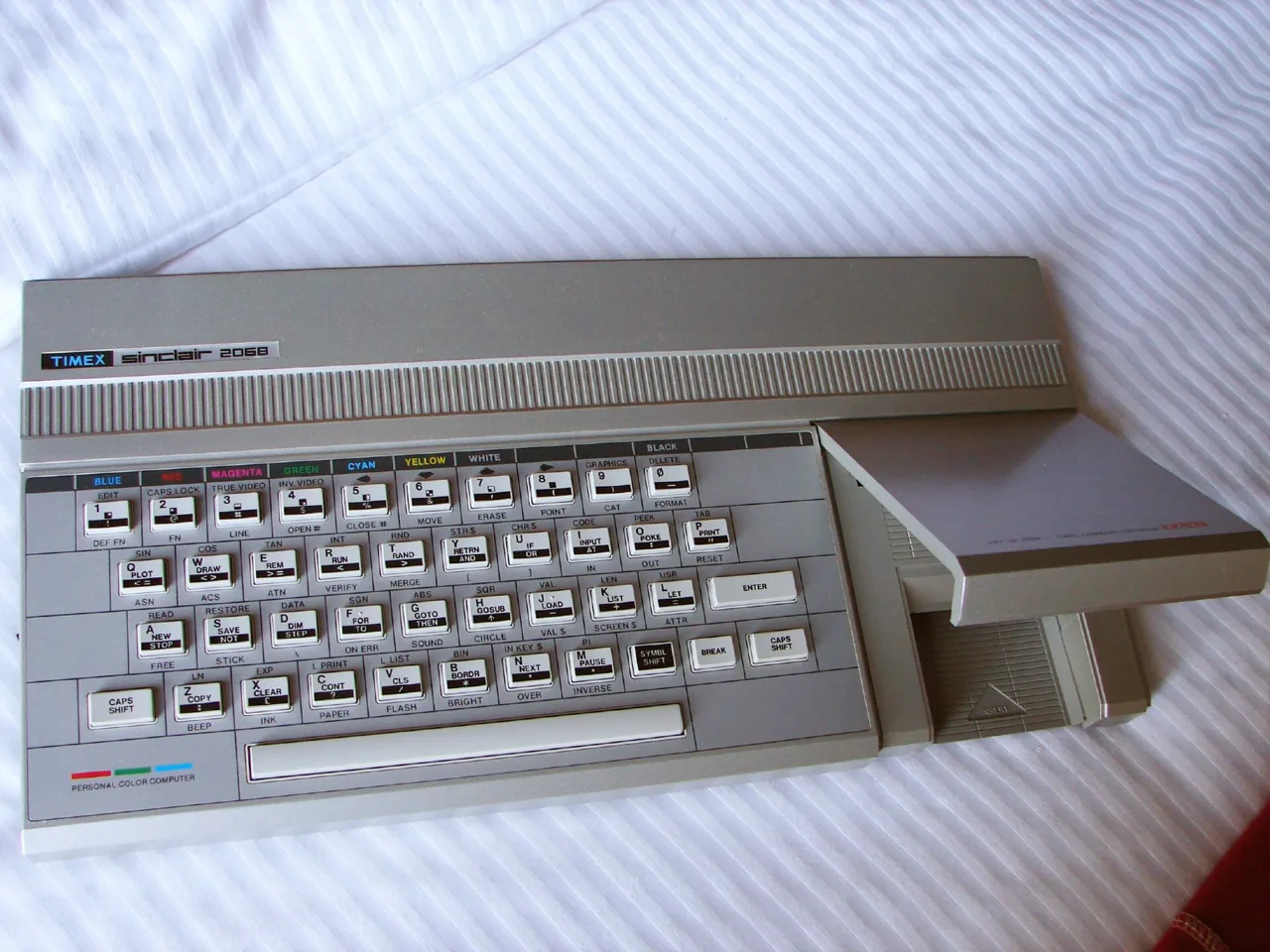
Timex announced the TS2068 in October of 1983 as the latest evolution in its short-lived American home computer line5. Marketed under various permutations, such as TS20685, TS-20686, and Timex/Sinclair TS20689, the machine carried the weight of expectation from users already invested in the TS1005 and TS10005. It arrived with promises of enhanced capabilities. The Timex 2000, which itself was described as a development of the UK’s Spectrum1, was re-engineered with added features to meet competitive pressure12.
The TS2068’s most celebrated technical feature emerged not from Timex, but from the user community. LarKen developed a method to switch between the TS2068’s native ROM and the Sinclair Spectrum’s ROM on the fly, effectively turning one machine into two8. This workaround addressed a core limitation: despite Sinclair’s earlier promise, no official floppy disk interface materialized8. The gap was filled by third parties, including LarKen and Ramex, who offered their own disk-interface systems815. Ramex even claimed their system brought “the finest in 2068 word processing” through Tasword II15, a claim that, while unverified by objective benchmark, speaks to the fervor of the platform’s niche following.
Peripherals formed a surprisingly rich ecosystem, at least on paper. The TS-2040 Printer610, TS-2050 Modems6, and the TS-2068 Winky Board6 were available, alongside expansion hardware such as the JLO TS-2068 Expansion Board6 and the Z-SIO serial interface6. Users could connect to Spectrum hardware via the Z-Link bus converter6, attach joysticks6 or a Wico Trackball6, and even interface with a plotter through the TS-2068/1520 adapter6. Cartridge software spanned utility and entertainment: Budgeter Cartridges6, States & Capitals6, Flight Simulator6, Androids6, and the OS-64 Cartridge6 offered a mix of education and play. LogiCall, a telecommunications program, was notable enough to be taught on the platform2.
The machine’s lifespan was measured in months, not years. On February 22, 1984, Timex announced its withdrawal from the home computer market5. The decision stunned users; one early adopter, who had purchased a TS2068 shortly after its announcement thanks to insider contacts at Timex Computer Corporation, recalled that no one outside the company could understand why such a promising product was being abandoned5. The broader context suggests a retreat from a price war Timex itself had escalated by undercutting competitors with the TS/100 (a rebranded ZX81)12. The TS/2000, initially slated for a $149 price point with 16K RAM12, was re-engineered with added features to meet competitive pressure12.
Despite its abrupt end, the TS2068 accrued a cult following. Its failure in the broader U.S. market—where Timex-Sinclair never achieved the prominence Sinclair enjoyed in the UK11—was offset by the tenacity of users who extended its life through hardware hacks and third-party support. The machine stands not as a commercial success, but as an example of what happens when a capable platform is orphaned early: the vacuum is filled not by the manufacturer, but by those who refuse to let it die.
References
- Inside the Timex Sinclair 2000 Computer (2000)
- gccc41 1nl
- Electronic Fun Computer and Games Vol 01 02 1982 Dec (1982)
- Introducing IBM PCjr
- Computer Monthly July 1990 (1990)
- gccc12 8nl
- gccc12 9nl
- gccc42 2nl-1
- gccc34 4nl
- micro 69 feb 1984[ocr] (1984)
- gccc34 3nl
- Archive item #198308
- 1984 02 BYTE 09-02 Benchmarks (1984)
- MICRO Vol69-02 84
- Ramex Millenia K Disk System flyer
- 1984 03 BYTE 09-03 Simulation (1984)