Apple Macintosh 128K
Apple Computer’s first mass-market personal computer, released with 128K bytes of RAM and a Finder-based operating system, priced at $2195.
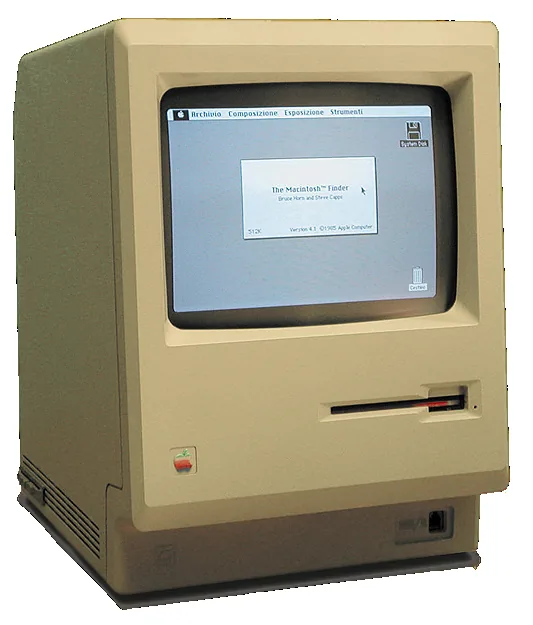
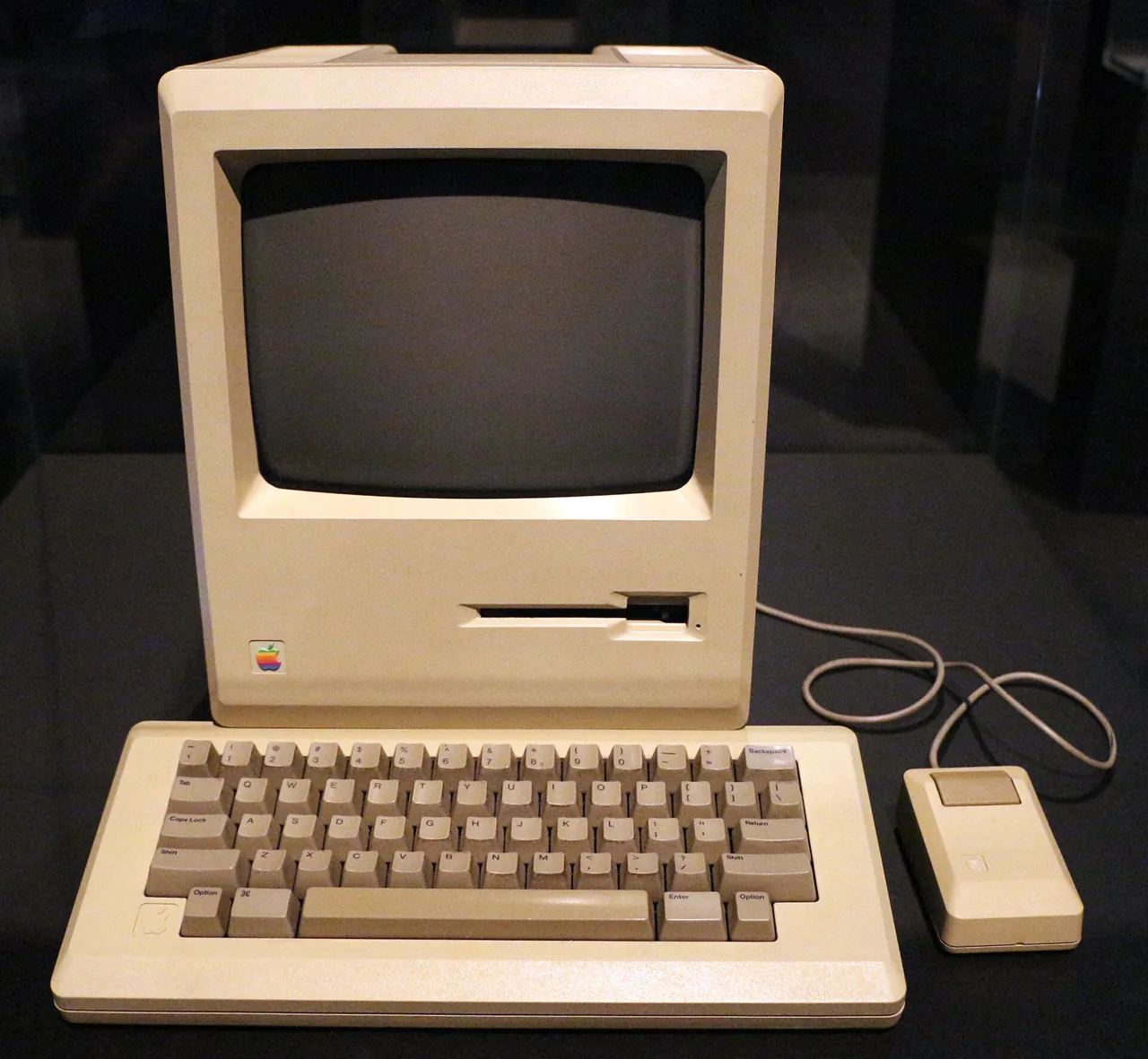
The Macintosh 128K shipped with 128K bytes of RAM, permanently affixed by soldering the memory chips directly to the main digital board. This design choice eliminated user upgrades and drew sharp criticism16. The machine was built around the Motorola 68000 processor13, and relied on a 128K ROM for core system functions, a component shared in documentation with the Macintosh 512K1415. Its operating environment centered on the Finder, described in period literature as “an extremely elegant operating system that is seriously flawed” due to the hardware’s constrained memory and storage16.
Apple provided no internal expansion, and peripheral connectivity was limited. Serial communication used a DB-9 connector, consistent across the 128K, 512K, and 512K Enhanced models212. The Macintosh Peripheral-8 Cable (Order No. M0196) linked the 128K to peripherals such as the ImageWriter II11, while direct inter-machine connection required Apple Part #M018512. Notable peripherals available at launch included the Macintosh External Disk Drive, Apple Personal Modem, and the Imagewriter paired with the Macintosh Accessory Kit1.
Development & Documentation
Software development for the 128K was supported through a range of early tools: the Macintosh 68000 Development System, Macintosh Pascal, MacFortran from Absoft, Mac C Compiler and Mac C ToolKit from Consulair Corporation, MacForth from Creative Solutions, and ExperLogo from Expertelligence1. Cross-development was possible via Lisa Pascal/Macintosh Cross-Development when targeting a 128K or 512K Macintosh1. The foundational technical reference, Inside Macintosh, covered the 128K and 512K in Volumes I and III. Volumes I through III collectively offered a full account of the architecture and ROM routines3678. Assembly developers used equates and macros that included provisions for the 128K ROM and HFS15.
Market Life & Discontinuation
The Macintosh 128K was priced at $2195 for the base configuration9. By June 1986, Apple officially listed the model as “no longer available”14. That same month, the suggested retail price for the 512K model was reduced to $199914. The 128K stood at the base of a growing Macintosh line that later included the 512K Enhanced, Macintosh Plus, SE, SE/30, II, IIc, and IIcx6.
Judgment
The decision to solder memory in place and ship only 128K bytes was, even in 1984, regarded as inexplicable16. The hardware struggled to run its own operating system: “Too often, the Finder simply overwhelms the hardware”16. One review concluded that effective performance would likely require 512K bytes and double-sided disk drives, precisely the configuration Apple soon released16. The machine’s technical constraints overshadowed its interface innovations, making the 128K a transitional artifact rather than a sustainable platform.
References
- Inside Macintosh Promotional Edition 1985 (1985)
- 072-0186 Apple Support Training Library Macintosh Vol I
- Inside Macintosh Hardware 198502 (1985)
- APDAlog 199104 (1991)
- AUUGN-V10.4
- MPW 3.0 Assembler Reference 1988 (1988)
- 1985 07 BYTE 10-07 Computers and Space (1985)
- AppleImageWriter2-BW2P
- RAMdump and ReAnimator Users Manual draft 3 19880420 (1988)
- Introduce Yourself to Amiga 1985 Commodore (1985)
- 1986 06 BYTE 11-06 Computers and Music (1986)
- Lisa Workshop Supplement Ver 1.0 1986 (1986)
- 1984 12 BYTE 09-13 Communications (1984)