Apple Mac Classic
Apple Computer, Inc. released the Macintosh Classic in October 1990 as an updated, cost-reduced version of the Macintosh SE, retaining the 8 MHz 68000 processor and integrating AppleTalk networking as standard equipment.
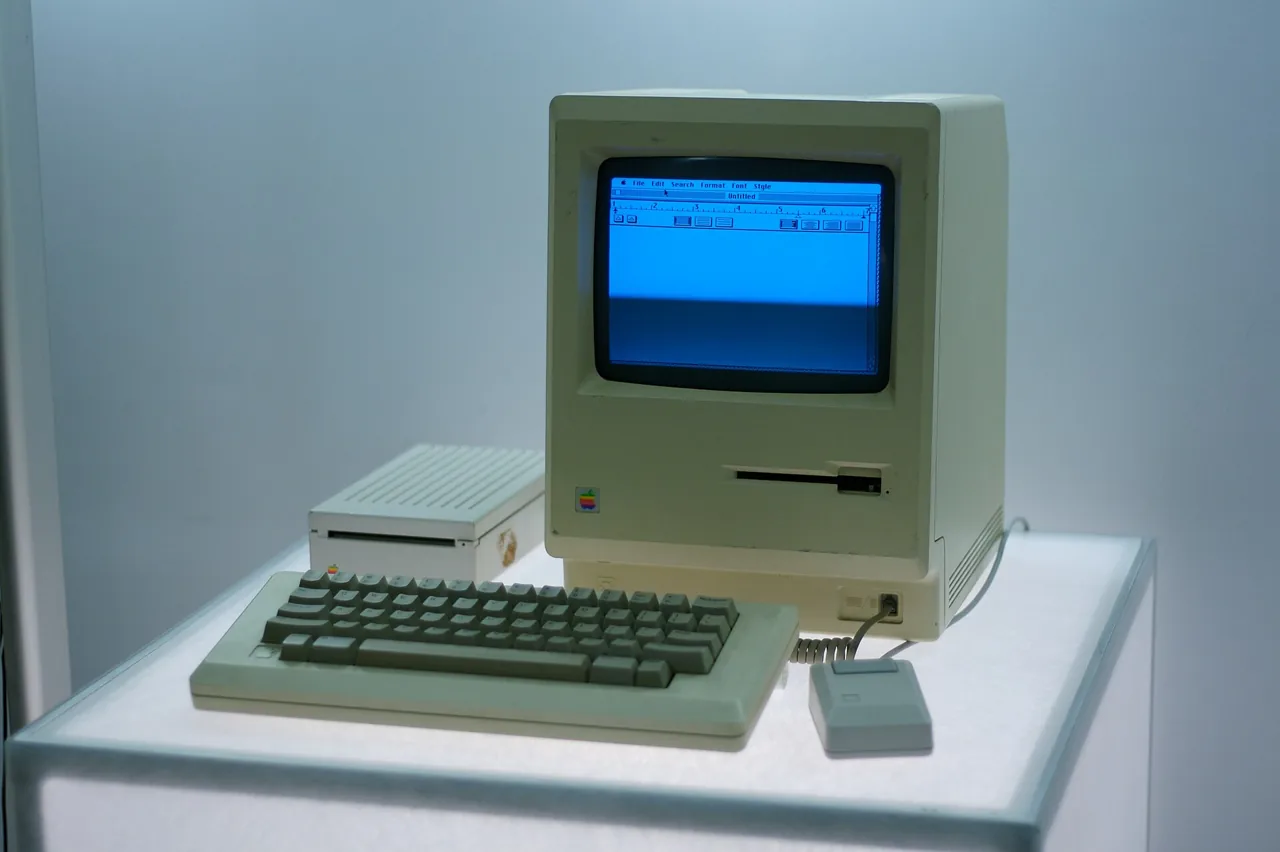
The Macintosh Classic arrived not as a leap forward but as a consolidation. Apple repackaged the aging Macintosh SE architecture into a refreshed all-in-one case, streamlining production and lowering entry cost for first-time Mac buyers2. It shipped with System Software 6.0.7, a version specifically compiled for the Classic and included in its initial release1114. Despite its vintage core, the machine was marketed as accessible and turnkey: one 1991 distributor bundle included a 50 MB third-party hard drive, 4 MB of RAM, SuperDrive, surge protector, and ten blank diskettes for $1,5999.
At its heart, the Classic ran a Motorola 68000 microprocessor clocked at 8 MHz. No floating-point unit or memory management unit was present, limiting its ability to run advanced multitasking or virtual memory workloads4. Base configurations included either 1 or 2 MB of RAM, expandable to 4 MB via a proprietary 44-pin expansion board that replaced the SE’s 96-pin connector235. The expansion path was narrow: only memory upgrades were supported, and no general-purpose slots existed2.
Storage options included a single internal 1.4 MB Apple SuperDrive, capable of reading and writing Macintosh, MS-DOS, OS/2, and ProDOS formatted disks, a rare cross-platform feature for the time27. An optional 40 MB internal SCSI hard drive was available, and the SCSI manager allowed up to seven daisy-chained peripherals, including the internal drive2. The system lacked sound input capability, and while it featured a stereo headphone jack, both channels carried the same monophonic signal derived from the “Mac Plus Sound” circuit24. Output peaked at 1 volt peak-to-peak when driving 32-ohm headphones4.
Peripheral connectivity relied on six built-in ports, including Apple Desktop Bus (ADB) for keyboard and mouse. Only one ADB port was provided, unlike earlier models with daisy-chaining flexibility2. The serial ports matched those of the Macintosh Plus but omitted support for synchronous modems and general-purpose input (GPI)2. Built-in AppleTalk enabled local networking out of the box, a small but meaningful inclusion for classroom and small office deployment9.
The integrated 9-inch monochrome display offered no stated resolution or color depth in surviving documentation, a silence that reflects its role as a functional, not featured, component7. The industrial design prioritized simplicity: an all-in-one form factor that required minimal setup and could be moved without disconnecting multiple components7.
Its place in the product line was both immediate and short-lived. The Macintosh Classic II, based on the LC logic board and equipped with a 68030 processor, delivered speeds up to 2.5 times greater and supported virtual memory, rendering the Classic’s architecture functionally obsolete within two years2. The Classic was a deliberate downgrade in expandability to meet a price point, repurposing proven but stagnant technology. That it sold at all speaks less to innovation than to Apple’s ability to repackage legacy systems into marketable form. The surviving documentation is silent on production figures, end-of-life dates, and physical dimensions. These gaps suggest the machine was never intended to be a centerpiece, but a placeholder.
References
- Classic Mac Tech Info 2002 (2002)
- PN 072-0228 Apple Service Technical Procedures Macintosh Family Volume One-Mar 1992 (1992)
- The Power User's Memory Upgrade - MacWarehouse (HQ)
- Macintosh Hardware Overview Feb91
- The Power User's Memory Upgrade - MacWarehouse (LQ)
- AAAC Vol. 07, No. 02
- CompuServe Magazine 1991-01 (1991)
- APDAlog 199104 (1991)
- CompuServe Magazine 1991-03 (1991)