Apple Macintosh Portable
Apple Computer, Inc. released the Macintosh Portable as a battery-powered, all-in-one personal computer with an active matrix LCD and 16 MHz Motorola 68000 CPU, aiming to deliver full Macintosh compatibility in a transportable form factor.
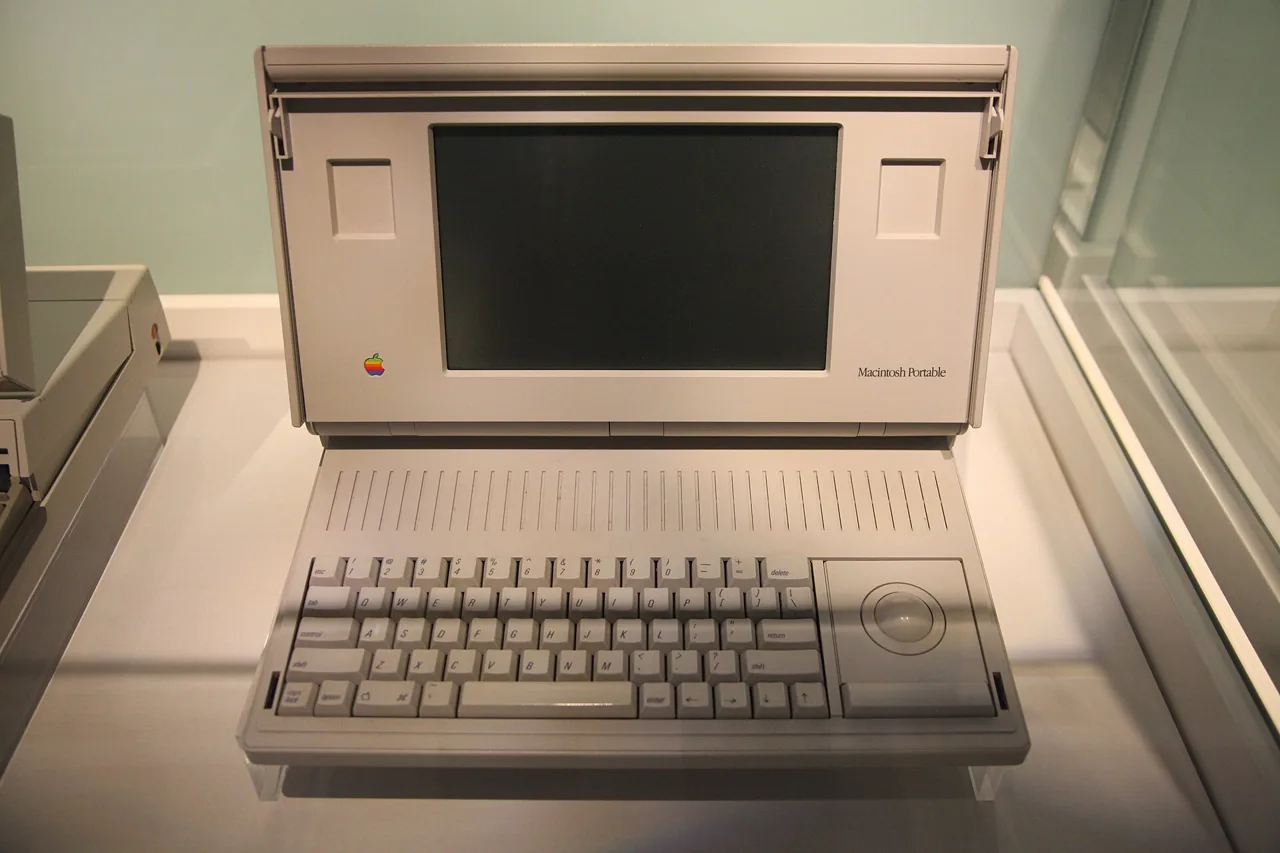
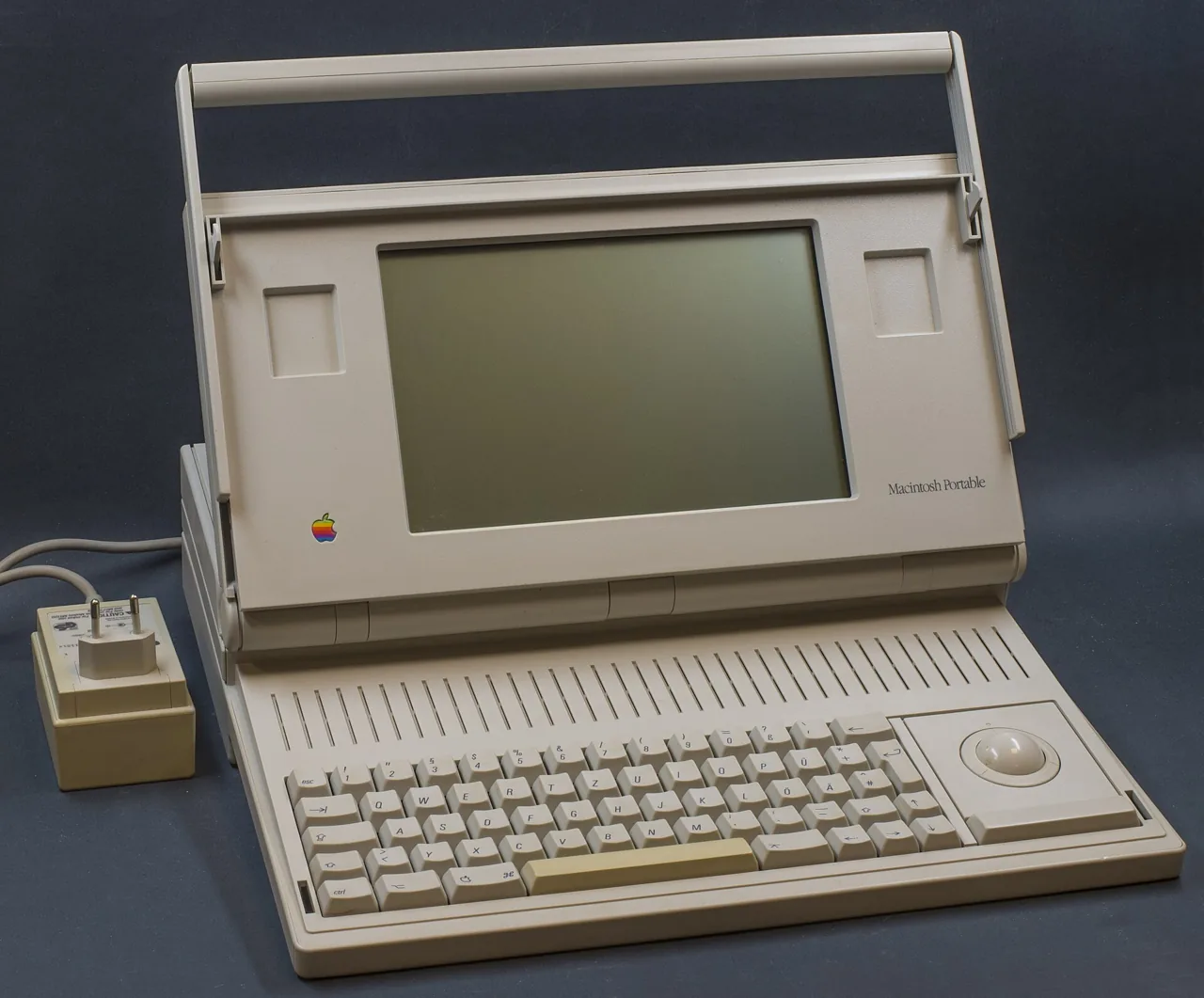
The Macintosh Portable was Apple’s first serious attempt at a self-contained, mobile Macintosh, housing a 10-inch active matrix LCD with 640-by-400 resolution, unusually sharp for its time, driven by a 16 MHz CMOS Motorola 68000 processor6. This CMOS variant was chosen specifically for its low power draw, enabling the system to operate for 6 to 12 hours on a single charge, aided by intelligent power management that deactivated idle components18. The machine shipped standard with 2MB of RAM, expandable internally up to 9MB using proprietary PSRAM cards such as the 3 MB PSRAM Expansion Card (part 661-1613) and the 1 MB PSRAM Expansion Card (part 661-1614)56.
Storage consisted of a built-in 1.44MB 3.5" SuperDrive and a 40MB internal hard disk, with an optional 80MB SCSI hard disk (Apple Hard Disk 80, part 661-0469) available for upgrade65. The SuperDrive could read MS-DOS and OS/2 formatted disks via Apple File Exchange, a utility included in the system software, a notable concession to cross-platform usability6. External floppy drives, including the Macintosh 400K, 800K, Apple 3.5 Drive, and Apple FDHD, could be connected via the DB-19 male external disk drive connector9.
Despite its all-in-one design and full compatibility with desktop Macintosh systems, the Portable was burdened by its physical form. Described as the size of an attaché case, it was never light. Surviving documentation does not provide an official weight, though one source cites 25.6 pounds for a Macintosh in a padded satchel. This figure, however, appears in a 1984 article describing the original Macintosh, not the Portable, and is likely erroneous for this model11. The ambiguity persists due to the absence of authoritative weight specifications in Apple’s own service and technical publications.
The Portable supported several optional peripherals: an internal domestic modem (part 661-0468)5, a numeric keypad, additional RAM, and a lightweight external keyboard (part 661-1612)15. The Farallon Portable Pack, a third-party bundle, included StarConnectors for AppleTalk LAN access and Timbuktu/Remote, software enabling screen sharing, file transfer, and remote email access over telephone lines, a rare early implementation of mobile office integration1. AppleShare workstation software, required for network access, was bundled with System Software 6.0 and later1.
System Software 6.0.5 was recommended for optimal operation47, though the specific version shipped with the machine is unrecorded in the surviving documentation. The Portable’s architecture shared a curious lineage with the later Macintosh PowerBook 100. Both were described as loosely coupled multiprocessor systems, with most PowerBook 100 circuits functionally identical to those in the Portable10. This suggests a shared engineering lineage, possibly a cost-reduction effort by reusing proven designs in a more compact form.
The display subsystem offered two official replacements: the standard Macintosh Portable LCD Display (part 661-0473) and a backlit variant (part 661-0647), hinting at user dissatisfaction with screen visibility in low-light environments5. This omission, combined with the machine’s high entry cost, listed in one 1984 document at $7,749, strains credibility14. That source predates the Portable’s known availability, and the price may reflect OCR corruption or mislabeling. No other document corroborates it. Still, given the hardware specifications, a premium price is plausible.
Ultimately, the Macintosh Portable occupied a narrow, awkward niche: technically capable and architecturally innovative, yet too heavy, too dim, and too expensive to gain traction. Its legacy lies not in sales success, figures are absent from the record, but in proving that a full Macintosh could run on batteries, paving the way (however indirectly) for the PowerBook line. It was a machine built for a future that had not yet arrived.
References
- M6198C Macintosh Multivendor Network Solutions Guide 199008 (1990)
- PN 072-8124 Apple Service Module Identification Manual-Jun 1994 (1994)
- AppleMaFamilyOctober1990 (1990)
- ApplePowerOfMac
- PN 072-0213F Apple Service Technical Procedures Peripheral Interface Guide-Jan 1991 (1991)
- Powerbook 100 Developers Note 1991 (1991)
- 1984 02 BYTE 09-02 Benchmarks (1984)
- 1984 08 BYTE 09-08 Modula-2 (1984)
- APDAlog 199104 (1991)
- CompuServe Magazine 1991-03 (1991)