DEC Rainbow 100
Digital Equipment Corporation introduced the Rainbow 100 in June 1982 as a dual-processor personal computer aimed at corporate users needing CP/M and MS-DOS compatibility, priced from $3,495 to $4,995 for the initial lineup of four systems.
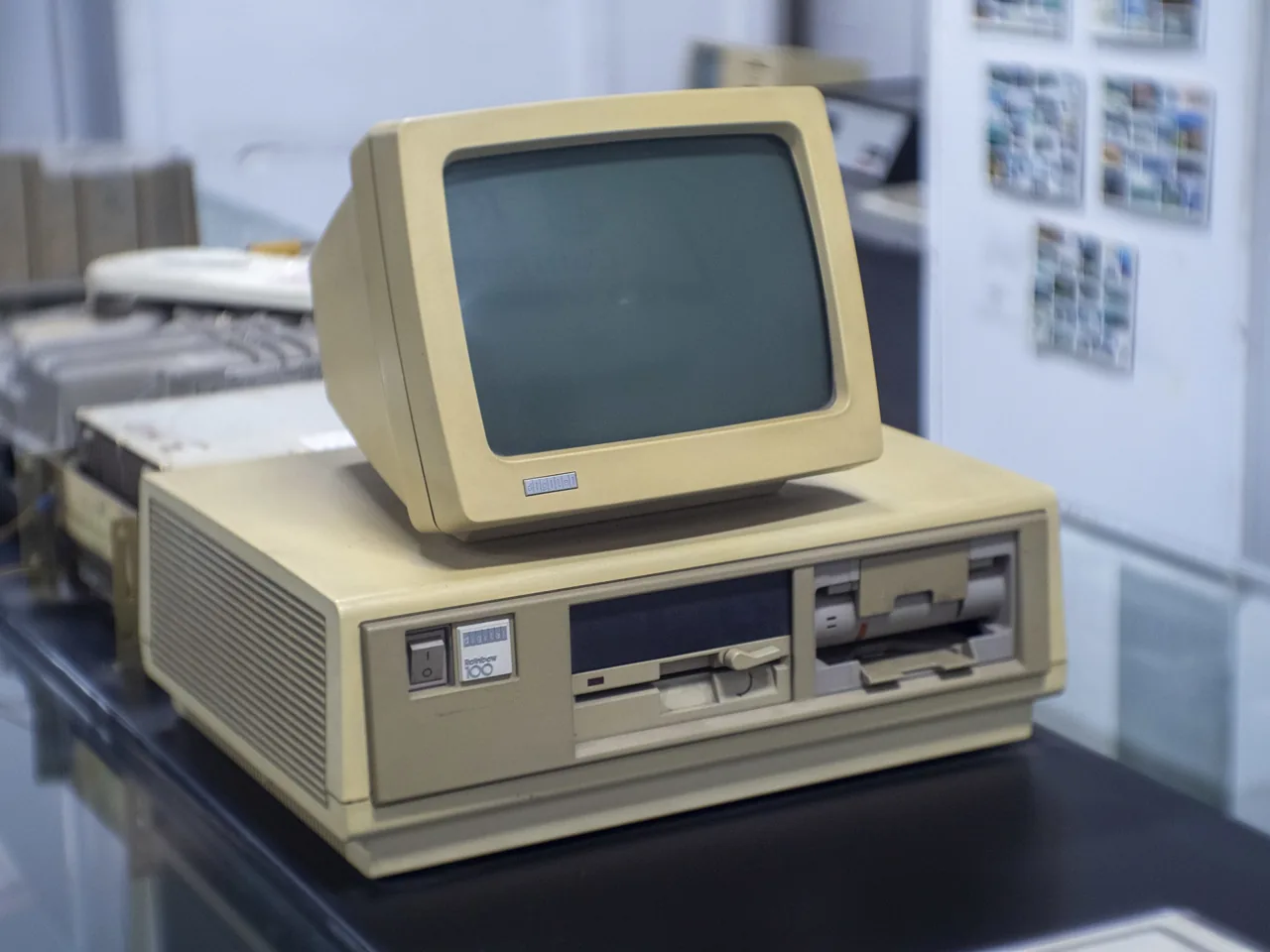
The Rainbow 100 was not DEC’s first foray into personal computing, but it was their most aggressive bid to date for corporate desktop dominance6. Marketed alongside the DECmate II and the Professional 325 and 350 in the PC300 series, the Rainbow featured a dual-processor system housing both a Z80A and an 808836. This architecture allowed it to run CP/M80, CP/M86, MS-DOS, and the UCSD p-System, positioning it as a bridge between DEC’s established minicomputer ecosystem and the burgeoning world of microcomputing36. The base configuration shipped with 64K of RAM, expandable to 256K, and two 400K floppy disk drives3. An optional 5 MB Winchester hard disk was available for $7755.
Hardware Identity Crisis
The Rainbow’s dual-processor design was both its selling point and its Achilles’ heel. While theoretically capable of running software from multiple environments, the sources do not specify whether switching between processors required a full reboot. The machine was advertised as a high-performance CP/M platform, yet its MS-DOS implementation (version 2.05, supplied by default on the 100 Plus) was noted to work perfectly and was provided at no extra cost, though no direct comparison to CP/M stability or support is made in the sources2. This imbalance suggested a hardware platform chasing software legitimacy rather than enabling it.
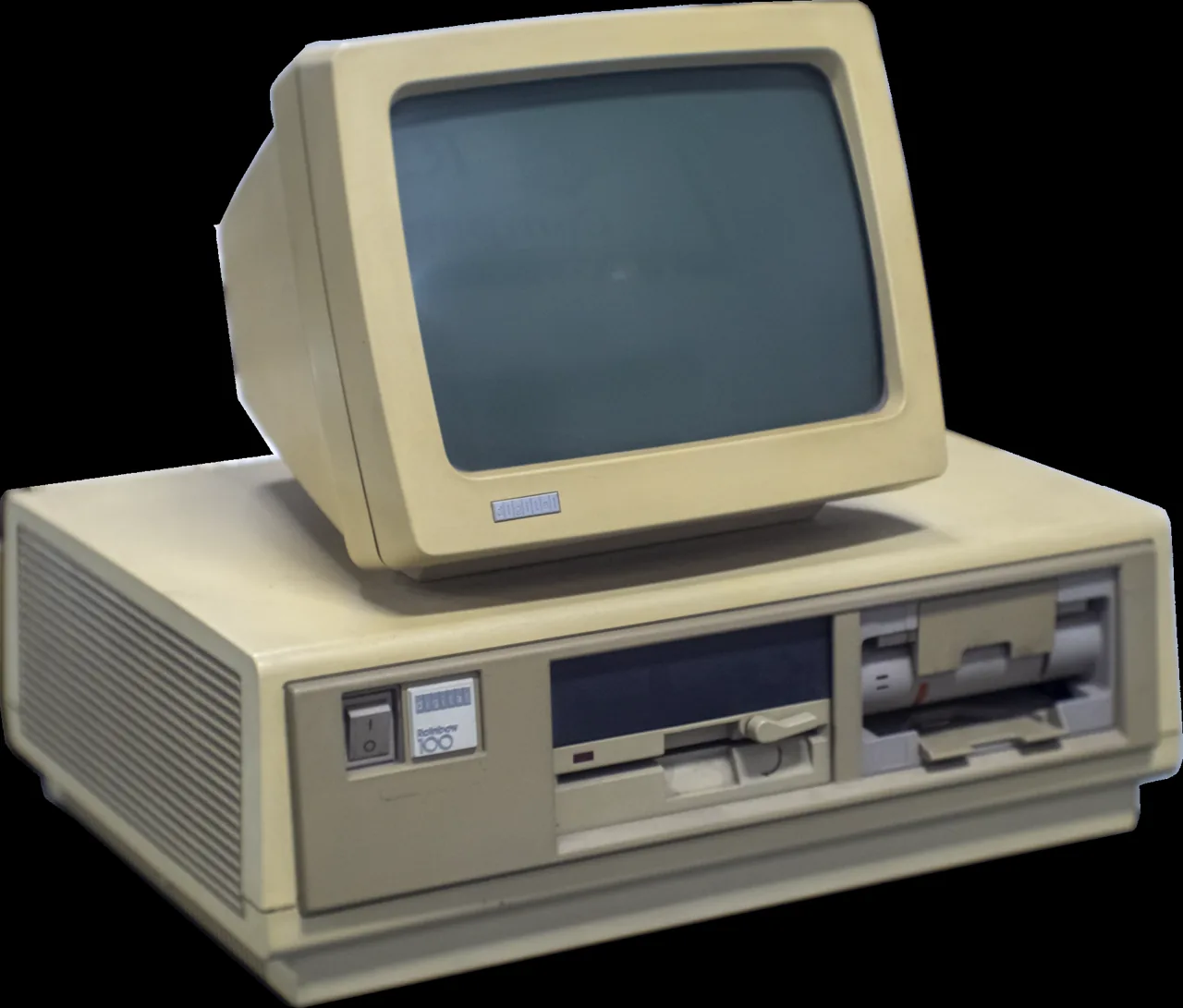
The physical design followed a shared cabinetry standard across DEC’s new personal computer families, except for the Professional 350, which required a larger case for its internal hard drive6. The Rainbow 100 featured a detachable keyboard, a feature praised by some for its layout and tactile quality, “superior to that of the IBM and may be the best in microcomputers today”2, while others condemned it as an ergonomic betrayal, citing a problematic key to the left of the space bar that emitted a complex escape sequence and a misplaced “> <” key between the Z and left Shift4.
Software and the Illusion of Ecosystem
DEC attempted to control software quality through the Digital Classified Software (DCS) program, which required third-party developers to adapt their programs for Rainbow hardware and special-function keys2. This gatekeeping effort was undermined by the reality of an unauthorized software market: one DEC booklet observed in a retail store listed hundreds of independent vendors offering Rainbow-compatible software2. Tools like Media Master version 2.1 enabled file translation across 24 disk formats, including Rainbow CP/M, Rainbow MS-DOS, DEC VT180, and IBM PC-DOS versions 1 and 2, effectively turning the machine into a format conversion appliance1.
A persistent myth held that only the Rainbow 100 Plus could format MS-DOS disks; this was explicitly refuted by users who confirmed that version 2.05 of MS-DOS, available at no extra cost and supplied by default on the 100 Plus, was the determining factor, not the hardware revision2. The “Plus” designation itself was misleading: it signified little more than the inclusion of a hard disk2.
Market Position and Internal Contradictions
Internally, DEC’s messaging was fractured. While the Rainbow was promoted as a staff assistant’s tool for running MultiPlan and dBase II3, one internal assessment suggested the company viewed it less as a standalone computer and more as a “glorified terminal” for office automation1. This ambivalence was mirrored in the market: the machine was intended to compete with the IBM PC in large corporate accounts seeking vendor-backed CP/M systems3, yet contemporary observers doubted its commercial traction, speculating that sales lagged far behind even niche competitors like the Zenith Z-1004.
By mid-1984, rumors circulated that DEC was not abandoning the Rainbow but rebranding it with a new model number and revised keyboard1. The existence of over 100,000 unsold units reportedly sitting in DEC inventory indicated a product line struggling to find its audience1. The price list from that year reflects a steep discounting strategy: the Rainbow 100A, listed at $3,245, was available for $1,699, while the 100+ (listed at $5,475) dropped to $3,4995.
The Rainbow 100 remains a case study in corporate microcomputer ambition: technically ambitious, architecturally split, and commercially adrift. It was a machine designed to satisfy procurement officers rather than programmers, and its legacy is one of unrealized potential, caught between DEC’s minicomputer heritage and a PC-compatible future it could emulate but not lead.
Specifications
| Manufacturer | Digital Equipment Corporation (DEC) |
| Model | Rainbow 100 |
| Introduction | June 19826 |
| Processors | Z80A, 80883 |
| RAM | 64K standard, expandable to 256K3 |
| Disk Drives | Two 400K floppy drives (standard)3 |
| Hard Disk | 5 MB Winchester (optional, $775 upgrade)35 |
| Operating Systems | CP/M80, CP/M86, MS-DOS, UCSD p-System36 |
| Keyboard | Detachable3 |
References
- CombinedNewsletter June1984 (1984)
- 1984 06 BYTE 09-06 Computers and Education (1984)
- Lisa Sales Marketing Binder Feb84
- 1984 03 BYTE 09-03 Simulation (1984)
- 1984 12 BYTE 09-13 Communications (1984)
- 1982 09 BYTE 07-09 Computers and the Disabled (1982)