Packard Bell
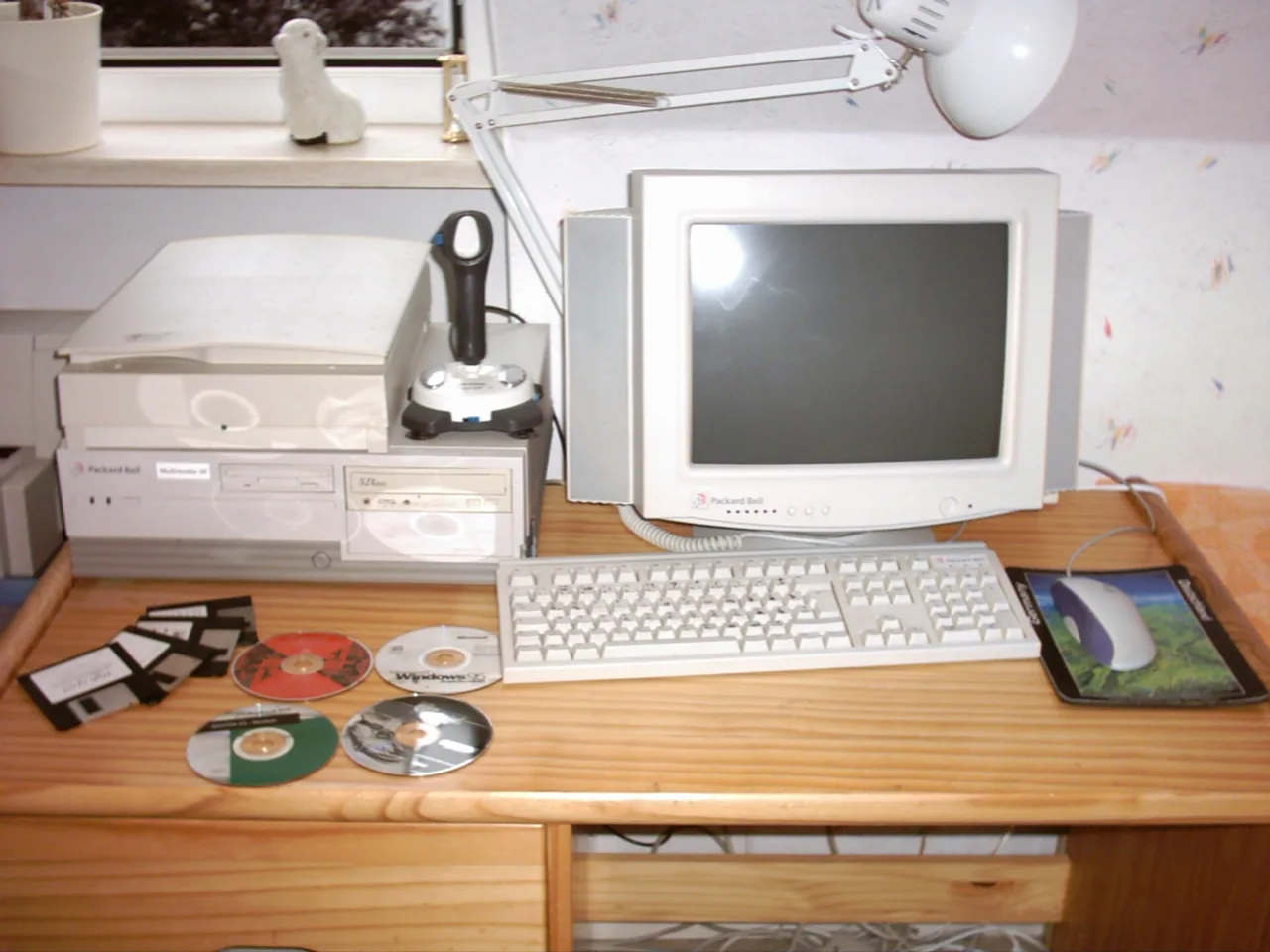
Personal computer systems marketed by Packard Bell in the late 1980s and early 1990s, positioning themselves as expandable, AT-compatible business platforms bundled with DOS 5.0, Windows 3.0, and QBasic, and emphasizing compatibility with existing software and peripherals.
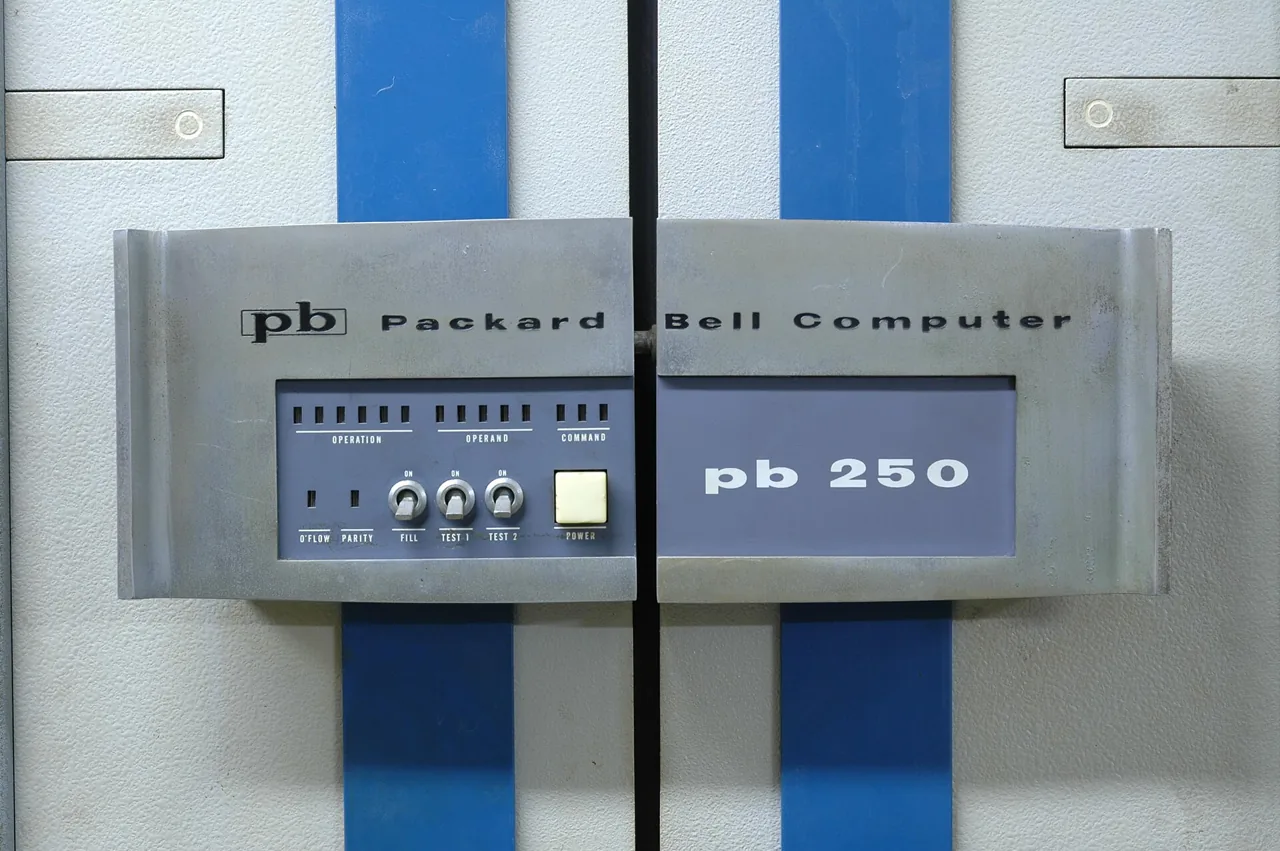
Despite sharing a name with the defunct radio and television manufacturer, the Packard Bell computer brand operated independently of any former Bell System entity1. The company invoked its legacy in consumer electronics, drawing a lineage from radios to televisions, to present its entry into personal computing as a natural evolution for American business3. Systems such as the VT 286 Business Computer were explicitly marketed as PC/AT compatible, promising "ultra fast, ultra reliable" performance for professional users3. This positioning extended to peripherals: monitors like the EGA Color Monitor supported CGA, EGA, and MGA standards, offering 64-color capability and compatibility across multiple display modes3.
The product line included models such as the PB 386-25 Rev D and PB 386-33, motherboards with configurable jumper settings that reveal a granular level of hardware control6. On these boards, P1 selected between 64KB and 128KB of cache memory, while P2 determined whether an 80387 or Weitek math coprocessor was active6. P3 adjusted EPROM size between 512KB and 256KB, and P16 indicated mouse presence6. A dedicated jumper, JP10, switched display output between monochrome and color modes6. Notably, a jumper setting existed to disable the 25-pin serial port entirely, suggesting either a diagnostic feature or a cost-saving measure in base configurations6.
Storage configurations varied: some systems included two floppy drives, while hard drives of 20MB and 40MB were offered17. One system was documented with 512KB of RAM7. The "intelligent" keyboard, a feature highlighted in period literature, implied onboard processing, though its exact functionality remains undocumented in the surviving material7. Software bundles were comprehensive for the era, including DOS 5.0, Windows 3.0, QBasic, and a tutorial, all described as "free" with the system1.
Monitors carried distinct model numbers and pricing: the 8551VG offered 640x480 resolution with a .51mm dot pitch at $199, while the 8539VG improved to .39mm at $2491. A higher-end model supported 1024x768 at .28mm for $3491. Listings in PC Magazine from 1994 include a "Packard Bell 14" SVGA .39DP" priced at $211, and a "15" SVGA .28DP NI" listed with price information that is ambiguous in the source material2. The "NI" suffix may indicate non-interlaced scanning, a detail absent from the fact sheet but implied by usage2. Warranty terms for monitors depended on purchase method: one-year on-site service applied only when bought with a PB Force system, otherwise defaulting to carry-in or mail-in1.
Modems were sold as standalone peripherals: the PB1200+ supported 300/1200 bps and cost $19913, while the PB2400EM offered 2400 bps at $59513. Internal 2400B modems were also available, and both 1200 and 2400 bps models were confirmed Hayes compatible13. The brand appeared in technical references through the mid-1990s, indexed in works such as Windows 3.1 Secrets and the URP 12th edition, and listed among contemporaries like Gateway 2000 and Dell101112. Technical support was reachable via (818)865-155 and (800)733-4434.
The surviving documentation is silent on exact processor specifications, expansion capabilities, physical dimensions, release years, and sales volumes. No sound hardware details or I/O port configurations beyond the serial port jumper are recorded. The brand’s narrative, however, was clear: it sold not just hardware, but a "total business system solution" capable of networking, multitasking, and protecting prior software investments3. Whether it delivered on that promise in practice remains a matter of user experience, but the documentation suggests a machine built for flexibility, not flair.
References
- 1992 02 BYTE 17-02 Tomorrows Chips (1992)
- PCMagazine V13N17 19941011 (1994)
- BYTE Vol 11-10 1986-10 Apple II GS (1986)
- CSC Hard Drive Bible - Edition 8 - 1996 (1996)
- pc engineers vol2 motherboards
- The Rainbow Vol. 08 No. 07 - February 1989 (1989)
- Windows 3.1 Secrets - Revised and Expanded
- URP 12th edition
- CompuServe Magazine 1992-10 (1992)
- The Rainbow Vol. 07 No. 07 - February 1988 (1988)