Intel 80286
Intel’s 1982 16-bit microprocessor introduced protected mode and on-chip memory management, enabling multitasking systems while maintaining backward compatibility with 8086 software.
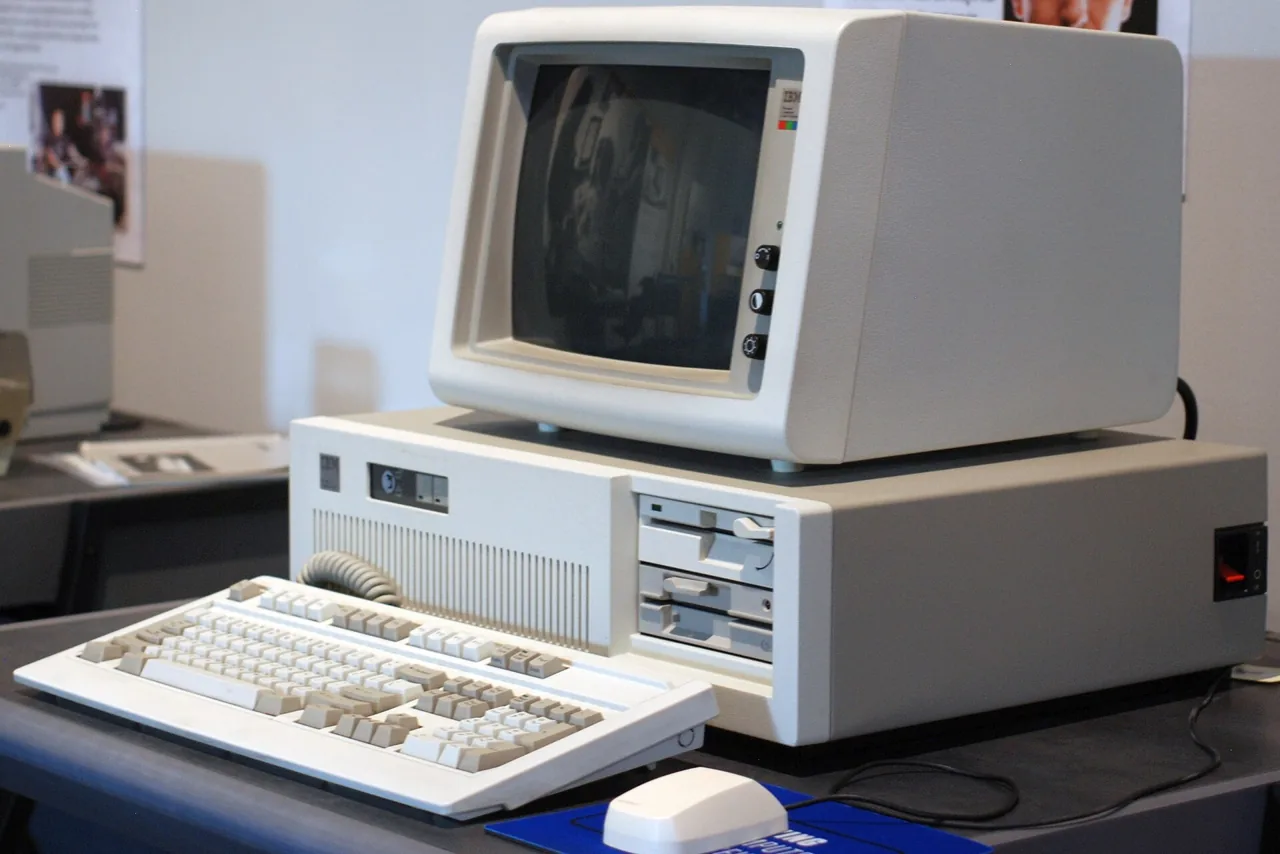
The 80286 represented a structural rethinking of Intel’s 16-bit line, embedding memory management and protection directly onto the die, a departure from the external logic required by earlier chips1. This integration allowed the processor to support up to 16 megabytes of physical memory45111216 and virtual memory addressing of up to 1 gigabyte per task1512, capabilities that remained largely theoretical until operating systems evolved to use them. The chip contained more than 100,000 transistors4, a density reflecting Intel’s shift toward complex, integrated control logic rather than raw arithmetic speed.
Despite its advanced features, the 80286 began life in disguise: it boots into “real mode,” where it mimics an 8088, addressing only 1024K of memory and executing 8086/8088 code without modification3. This mode was not a simple compatibility layer but a hard architectural constraint: switching to protected mode was difficult to reverse, limiting its practical use in early multitasking experiments. The processor’s dual identity, described as “two CPUs in one”3, meant that real-world performance gains were often bottlenecked by software inertia. DOS, designed for the 8088, forced the 286 to operate permanently in real mode3, rendering its advanced features inert in the dominant PC environment.
Hardware design around the 80286 revealed both ambition and compromise. It featured 24 address lines (A0–A23)16 and a 16-bit data bus (D0–D15)16, with instructions varying from 8 to 40 bits in length1. The fastest instruction executed in two clock cycles, achieving 250 ns at 8.0 MHz1 or 0.2 microseconds at 10 MHz12. Eight 16-bit general-purpose registers were available12, and the chip supported two interrupt levels12. It could be paired with the 80287 floating-point coprocessor114, whose clock rate was jumper-selectable at 5.3 or 8.0 MHz, independent of the main CPU1. The 82258 ADMA controller was specified for direct memory access1, though system implementations varied.
Intel positioned the 80286 as the foundation for multiuser systems, citing its enhancements over the 8086 core4 and compatibility with existing software28. The company promoted its XENIX operating system, a licensed derivative of UNIX, specifically optimized for the 802861, and supported development with tools like the iSDM 286 monitor for on-target debugging1. The iRMX U operating system was also designed for 80286-based single-board computers10. Yet the market’s pivot to protected mode was slow; even OS/2, which was designed to take advantage of the 80286’s capabilities, was later adapted to run on the 803867.
The 80286’s legacy is defined by its near miss. It introduced capabilities that would become standard (on-chip memory management, protected execution, and task switching with hardware support12) but arrived before the software ecosystem could use them. Its rigid mode-switching behavior and the industry’s dependence on DOS relegated it to a transitional role, outpaced by the 80386, which offered improved performance and object code compatibility with the 8028614. Still, in embedded systems and industrial controllers, the 286 lingered for decades due to its enduring design and the inertia of deployed hardware.
Specifications
| Manufacturer | Intel Corporation |
| Product type | Microprocessor |
| Release year | 1982 |
| Clock rates | 8.0 MHz, 10 MHz (others reportedly available) |
| Physical memory addressing | 16 MB |
| Virtual memory addressing | Up to 1 GB per task |
| I/O address space | 64 KB |
| Address bus | 24 lines (A0–A23) |
| Data bus | 16 bits (D0–D15) |
| Instruction length | 8, 16, 24, 32, or 40 bits |
| General-purpose registers | 8 (16-bit) |
| Interrupt levels | 2 |
| Transistor count | More than 100,000 |
| Coprocessor | 80287 (jumper-selectable clock: 5.3 or 8.0 MHz) |
| DMA controller | 82258 ADMA |
| Compatibility | Upward with 8086/8088; downward with 80186/88 |
| Modes | Real mode, Protected mode |
References
- Archive item #280147002
- 1983 04 BYTE 08-04 New Chips (1983)
- Minasi - Inside OS2 2.0 1992 (1992)
- The 80x86 IBM PC and Compatible Computers - 4th Edition
- BYTE Vol 10-01 1985-01 Through The Hourglass (1985)
- Compaq 286-Based Products Technical Reference Guide Volume 1 198712 (1987)
- Godfrey - Programming the OS2 Kernel 1991 (1991)
- TheMS-DOSEncyclopedia RayDuncan
- 210621-031 Intel Literature Guide Dec88
- 461844-001 Extended iRMX II.3 Volume 1 Introduction Installation and Operating Instructions 1988 (1988)
- iPSC System Product Summary
- Programming The M68000 1983 Addison-Wesley Publishing Company (1983)
- System BIOS for IBM PC XT AT Computers and Compatibles 198908 (1989)
- 280411-001 iSBC 386 2x Brochure Sep1986 (1986)
- SystemBIOSforIBMPC XT ATComputersandCompatibles Phoenix
- 129003-00A TeleVideo TeleCAT-286 Technical Reference Manual Jul86